US Navy awards $418.5m contract to scrap first nuclear carrier
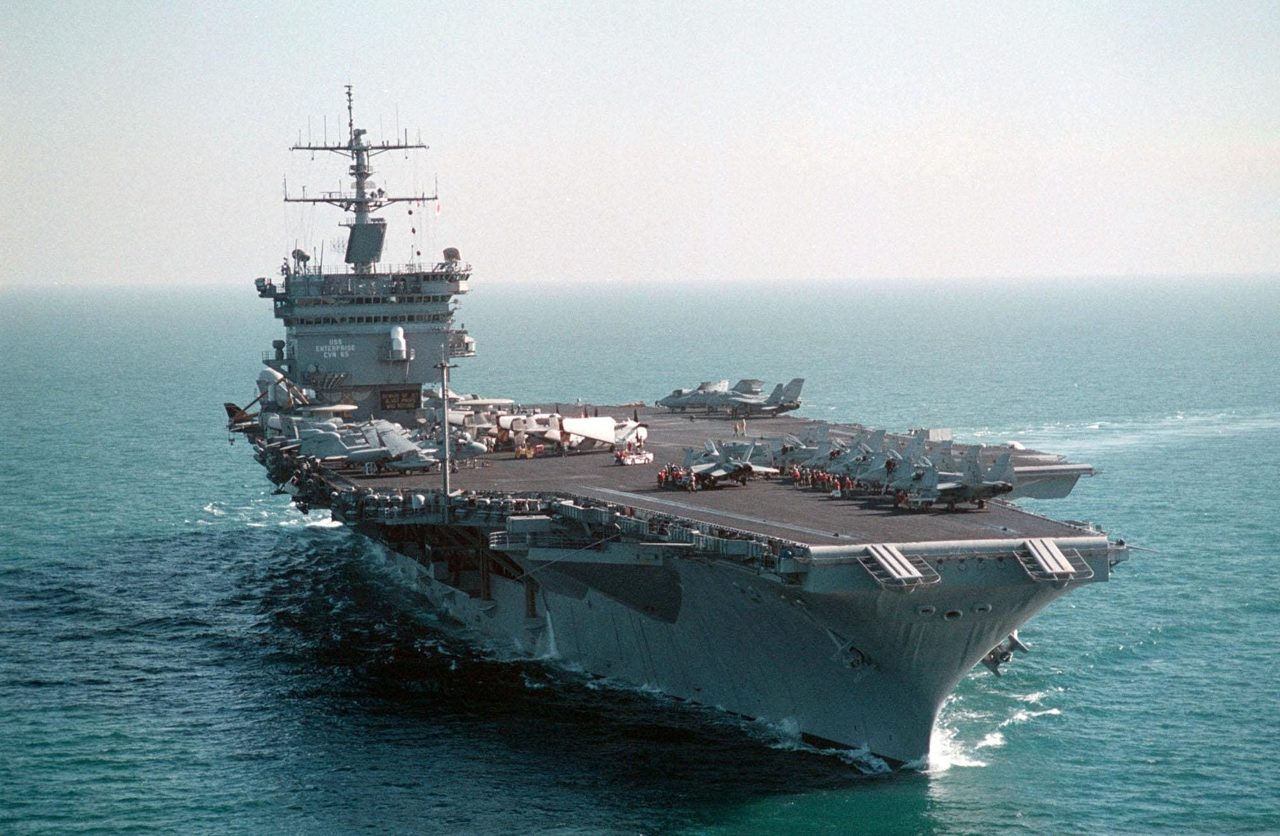
The U.S. Navy has awarded a $418.5 million firm-fixed-price contract to dismantle the retired USS Enterprise, establishing a costly new blueprint for the eventual recycling of dozens of nuclear-powered warships.
NorthStar Maritime Dismantlement Services will dismantle and recycle the USS Enterprise in Mobile, Alabama, by September 2030 under a new $418.5 million firm-fixed-price contract. The Vermont-based contractor must safely remove eight nuclear reactors and dispose of hazardous materials, including low-level radioactive waste and asbestos, at licensed facilities.
This award follows a legal battle that underscores the financial stakes of defense contracting. NorthStar originally won a $536.7 million contract in 2025, but rival HII ShipCycle successfully protested the decision. The U.S. Court of Federal Claims ruled the Navy’s exclusion of HII was "arbitrary and capricious" after the company blamed technical difficulties and a computer glitch for its flawed bid. A mandatory reassessment of bids ultimately shaved $118 million, or 22%, off the initial price tag.
The revised contract structure shields the federal budget from further cost overruns. Because the deal is firm-fixed-price, NorthStar and its partners must absorb any unexpected expenses during the lengthy dismantling process. As The Defence-Blog noted, this "shifts financial risk onto the contractor rather than the government if expenses run higher than expected."
The USS Enterprise is merely the first in a looming wave of nuclear vessel decommissioning that will generate decades of work for the defense dismantling sector. The USS Nimitz is scheduled for decommissioning in March 2027, with its own multiyear recycling program to follow at Newport News Shipbuilding. Eventually, all 10 Nimitz-class carriers and the newer Gerald R. Ford-class vessels will require the same expensive end-of-life processing.
The costs represent a stark shift from the disposal of conventional warships. The Navy sold its last two non-nuclear aircraft carriers, the USS Kitty Hawk and USS John F. Kennedy, for a single cent each to scrappers. Nuclear propulsion, while offering unlimited operational endurance, saddles the military with hundreds of millions in deferred disposal liabilities.
There is some material offset to the massive price tag. Naval News reported that up to 35,000 tons of steel salvaged from the retired Enterprise could be recycled into the construction of the future USS Enterprise (CVN-80). That Ford-class supercarrier is currently under construction, though delivery has been delayed to around March 2031 or later.
Every lesson NorthStar learns processing the historic flattop will become the operational standard for the Navy. "Every lesson NorthStar’s team learns cutting apart the Big E, every cost overrun avoided or safety protocol refined, becomes the blueprint the Navy will lean on," The Defence-Blog reported. For contractors, mastering this process positions them for a steady pipeline of government work as the Navy grapples with the hidden costs of its nuclear fleet.


