Argentina ends Russian nuclear deals, awards $1.2bn US reactor contract
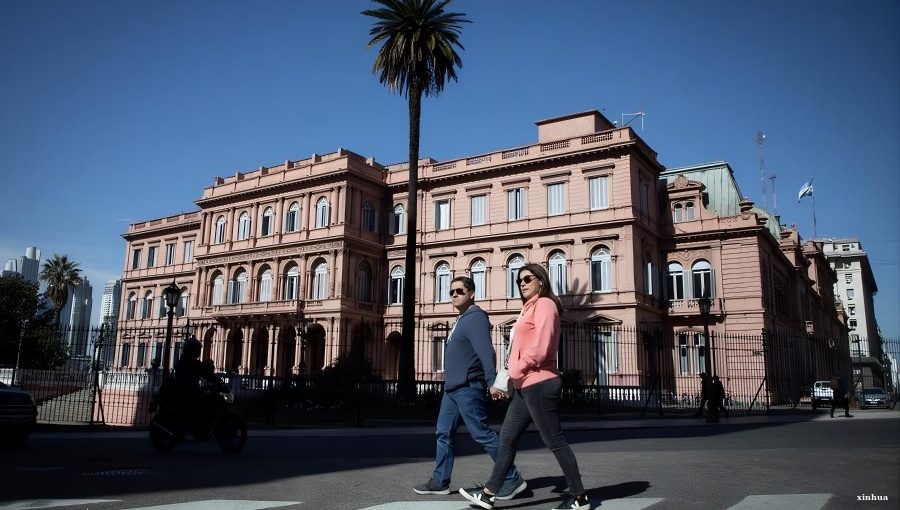
Argentina has cancelled civil nuclear projects with Russia's Rosatom in favour of a $1.2bn deal with US firm Meitner Energy, signalling a wider regional shift in energy contracts toward Western capital.
Argentina has formally ended its civil nuclear energy cooperation with Russia, opting instead to partner with US firms as President Javier Milei overhauls the country's strategic energy sector. Ambassador Dmitry Feoktistov confirmed that joint projects led by Russian state nuclear firm Rosatom, including plans for large VVER-1200 reactors, are no longer advancing. "As far as we know, bilateral cooperation in the peaceful use of nuclear energy is not currently taking place," he told Izvestia.
The collapse of the Russian partnership, which originated in a 2018 bilateral agreement, clears the way for US capital. Buenos Aires recently signed a $1.2bn contract with Meitner Energy to construct a small ACR-300 reactor and joined the US FIRST nuclear programme. The government also announced plans to privatise the state nuclear company Nucleoeléctrica Argentina, with future private investment governed by the RIGI framework approved by Congress.
Rosatom’s retreat from Argentina extends beyond nuclear power into critical minerals. A subsidiary, Uranium One, lost a planned $30mn investment for a 15% stake in the Tolillar lithium deposit after Canada's Alpha Lithium cancelled the 2021 agreement following the imposition of sanctions. The project has since been taken over by the Italo-Argentine conglomerate Techint.
Regional setbacks for Moscow
The asset losses in Buenos Aires reflect a broader rollback of Russian state energy investments across Latin America. In Bolivia, a decree passed in April banning direct deals without open tenders has effectively frozen a Russian-backed lithium project under centrist President Rodrigo Paz. Feoktistov acknowledged the shift, stating: "Rosatom's subsidiary has focused its efforts on Bolivian projects," though those efforts now appear stalled.
The pressure is even more acute in Venezuela, previously a key Kremlin ally. Following the capture of former president Nicolás Maduro by US forces and the installation of Delcy Rodríguez as interim leader, Russian firms face an uncertain future. Foreign Minister Sergei Lavrov claimed in February that Russian companies are being "quite openly forced out" of the country under pressure from Washington, despite state firm Roszarubezhneft insisting it retains ownership of its joint ventures with PDVSA.
Despite this geopolitical realignment, total bilateral trade between Russia and Argentina surged by more than 80% in 2025, driven primarily by Russian fertiliser exports. Feoktistov noted ongoing mutual commercial interest in the oil and gas sector. For Russian state energy majors, Brazil remains the primary and most secure regional foothold, with Rosneft holding stakes in the Solimões basin project and Rosatom subsidiary INB continuing to supply enriched uranium to Brazil's Angra nuclear plant.