EU defence firms tap Ukraine as industrial partner, not aid client
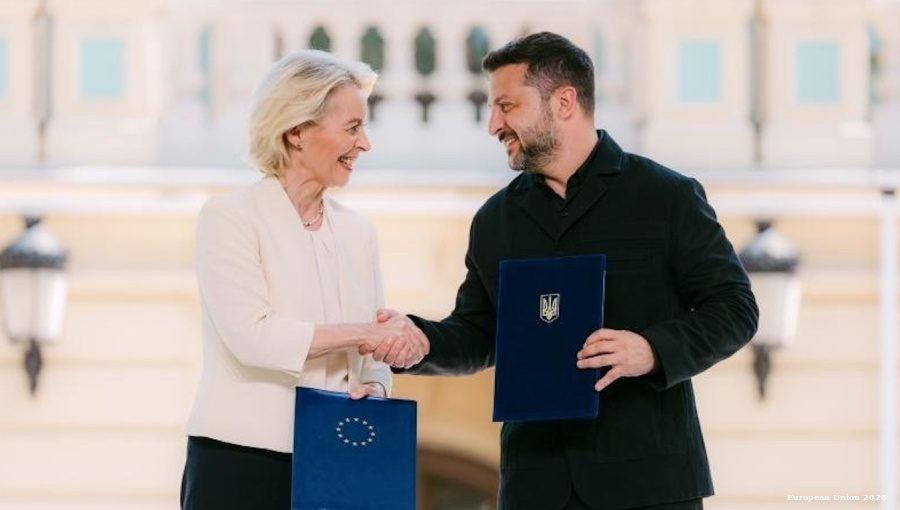
The EU has launched a defence-industrial partnership with Ukraine, turning Kyiv from a military aid recipient into a critical technology supplier for Europe's aerospace contractors.
The European Union and Ukraine have established a new defence-industrial partnership anchored by a "Drone Deal", marking a fundamental shift in how Europe sources its military hardware. "Ukraine has gone from a buyer to a supplier of security equipment for Europe. This requires new ways of working together," European Commission President Ursula von der Leyen said in Kyiv.
The agreement moves beyond emergency wartime aid by structuring joint production, technology transfers and shared financing. As part of the arrangement, the European Commission is deploying a second €1bn tranche of a broader €6bn financing programme specifically for Ukrainian drone procurement.
Ukraine's manufacturing scale is rapidly attracting European capital. President Volodymyr Zelenskiy noted the country currently produces around 10mn drones annually, with a target to double that to 20mn through international partnerships. To sustain this growth, Kyiv has introduced an export framework that channels 20% of revenues from finished military exports and 30% from component exports into a dedicated state defence fund.
Corporate integration accelerates
The industrial synergy extends well beyond unmanned aerial vehicles into complex missile defence. A consortium of major European contractors—Thales, Airbus, MBDA Deutschland, Safran and start-up Destinus—plans to establish the Bliksem EXO group within the next three months.
The consortium will develop an exo-atmospheric interceptor, featuring an Exo-atmospheric Kill Vehicle, designed to neutralise advanced manoeuvring warheads like Russia's Oreshnik missile. Engineering work is scheduled to begin in August, with testing targeted for 2027.
Under the corporate structure, MBDA Deutschland will build the interceptor missile and launcher, Safran will supply guidance and seeker technologies, Airbus will handle command-and-control systems, and Thales will provide radars, sensors and early-warning technologies. For investors in the European aerospace sector, the strategic implication is clear: battlefield data from Ukraine is directly driving the research pipelines of Europe's largest defence primes, embedding Kyiv into the continent's long-term supply chain.