Russia courts Asian capital for Far East to replace lost Western FDI
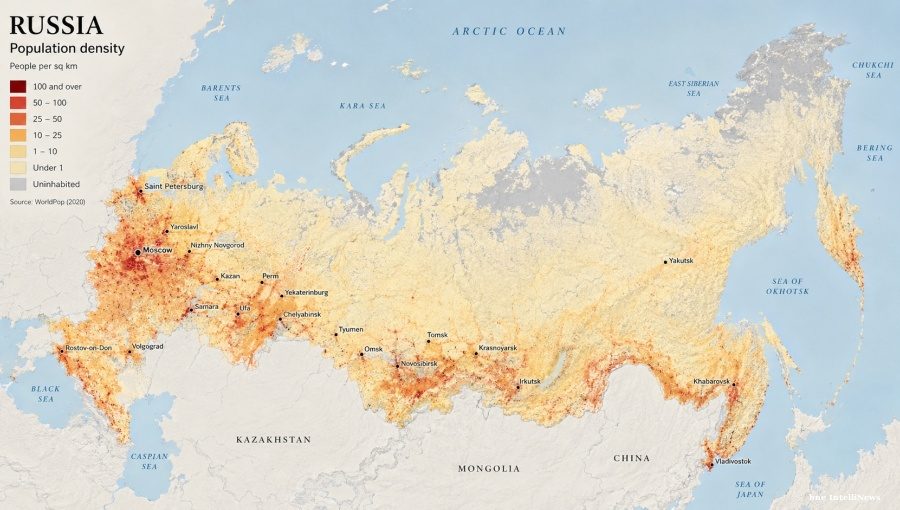
Moscow is offering aggressive tax breaks to turn its resource-rich Far East into an Asian supply chain hub, but record investment pledges mask deep reliance on China and a lack of greenfield foreign capital.
Investors committed a record RUB 1 trillion ($13bn) to Russian Far Eastern projects in 2025, as the Kremlin leverages sanctions-driven trade shifts to build an Asian economic corridor. The capital influx marks the highest annual total since Moscow introduced preferential development frameworks for a region spanning 40% of its territory but home to just 8.1 million people.
The strategy is to use state-backed incentives to process raw materials locally rather than exporting unrefined commodities. The region holds vast reserves of gold, copper, coal, diamonds and critical minerals, alongside major liquefied natural gas facilities in Sakhalin. With China now accounting for roughly 35% of Russia's foreign trade, Moscow wants to physically integrate these Pacific ports into Asian supply chains.
To accelerate this, authorities have layered tax breaks, subsidised infrastructure, and administrative fast-tracks through special economic zones and the Free Port of Vladivostok. In early 2026, Moscow added International Advanced Development Zones tailored specifically for foreign capital. Overall commitments under these regimes have reached RUB 15 trillion ($195bn), with RUB 6.8 trillion ($88.5bn) deployed across more than 4,000 projects.
Despite the headline numbers, independent analysts note a gap between announced projects and operational businesses. China is the dominant foreign player, with 94 Chinese-backed projects worth over RUB 1 trillion underway in the Primorye region alone. Yet this capital remains concentrated in resources and infrastructure, and trade has vastly outpaced the greenfield direct investment needed to replace Western capital lost since 2022.
This shortfall is driving a diplomatic scramble for alternative funding. Moscow is targeting India's expanding steel sector to develop Yakutia's metallurgical coal, banking on a bilateral trade surge from $13bn in 2021 to over $68bn in 2024-25. Gulf sovereign wealth funds are being courted for cold-chain logistics and food production, while Southeast Asian nations are eyed for mineral processing and agricultural partnerships.
For potential investors, the calculus remains fraught. The Far East continues to battle chronic labour shortages, inadequate infrastructure, and elevated construction costs that drag down investment returns. Furthermore, official figures conflate contracted projects with completed capital expenditure, a dynamic that prompted KRDV chief executive Nikolai Zapryagayev to recently stress the need for a new generation of investors to sustain momentum.