Argentina rejects Falklands vote, challenges Sea Lion oil licences
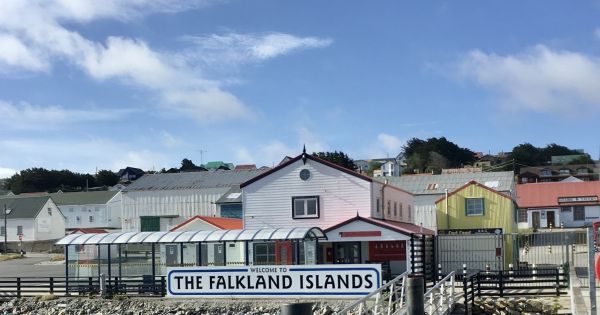
Argentina's foreign minister has dismissed the 2013 Falklands referendum and challenged the legality of oil development licences, escalating a sovereignty dispute that threatens energy investors in the region.
Argentina's foreign minister, Pablo Quirno, has explicitly rejected the 2013 Falklands referendum and called for bilateral negotiations, while directly challenging the legitimacy of oil development projects in the archipelago's waters.
For energy investors, the immediate risk lies in Quirno's specific targeting of offshore exploration. He labelled the licences for the Sea Lion oil field as illegitimate, condemning what he described as the unilateral exploitation of natural resources. This rhetoric raises the political and regulatory risk profile for any company operating in the area.
Writing in the newspaper La Nación, Quirno argued that “time does not transform an illegitimate occupation into sovereignty.” He dismissed the principle of self-determination for the islands' roughly 3,000 inhabitants, arguing the population was implanted by the UK. He contrasted this civilian presence with the roughly 1,200 British military personnel stationed there to emphasize the strategic nature of the territory.
London has dismissed the calls for talks. A spokesperson for Prime Minister Keir Starmer reiterated that sovereignty rests with the UK and that the islanders' right to self-determination is paramount, a position backed by Foreign Secretary Yvette Cooper. Islander representative Michael Goss echoed this stance at a UN session in June, dismissing Argentina's push as a transfer of ownership disguised as diplomacy.
The dispute persists despite an annual UN Decolonization Committee resolution, co-sponsored by Chile, urging negotiations. The rhetoric has intensified recently following reports of a potential US review of its position on the British claim. President Javier Milei has maintained that the islands “were, are and will always be Argentine,” while Vice President Victoria Villarruel sparked controversy by suggesting British residents should return to the UK.
For now, the core positions remain locked. The 1982 war, which killed 649 Argentine and 255 British service members, cemented the dispute. Argentina's continued refusal to recognize the 2013 plebiscite, in which 99.8% of voters backed retaining British territory status, ensures that oil and gas assets in the waters will remain tethered to deep geopolitical uncertainty.