UN warns Asian crime networks are laundering billions via tech
A new U.N. report reveals Southeast Asian syndicates are using artificial intelligence and cryptocurrencies to build a sprawling global illicit economy, projecting scam losses alone between $88.3 billion and $114.1 billion in 2025.
Southeast Asian criminal syndicates are deploying artificial intelligence, encrypted networks and cryptocurrencies to build a sprawling global illicit economy, according to a United Nations report released Tuesday. The U.N. Office on Drugs and Crime estimates that scams orchestrated by these networks will cause combined global losses of $88.3 billion to $114.1 billion this year.
For financial institutions and compliance officers, the report highlights a rapidly evolving systemic risk. Criminals are laundering proceeds through global financial systems using digital assets and leveraging generative AI to execute convincing phishing attacks. The technology allows syndicates to run real-time deepfake video and voice calls, scaling their operations across multiple languages simultaneously.
These sprawling networks rely on hundreds of scam compounds scattered across Southeast Asia to sustain their operations. Beyond digital fraud, these sites function as hubs for human trafficking and forced labor, providing the illicit workforce required to run industrial-scale scam operations.
The illicit economy also extends deep into legitimate physical supply chains. The report identifies the Sulu-Celebes maritime triangle between Indonesia, Malaysia and the Philippines as a critical smuggling corridor. Latin American cocaine is increasingly being embedded within legitimate commercial shipments, such as Chinese tea, to reach Asian markets.
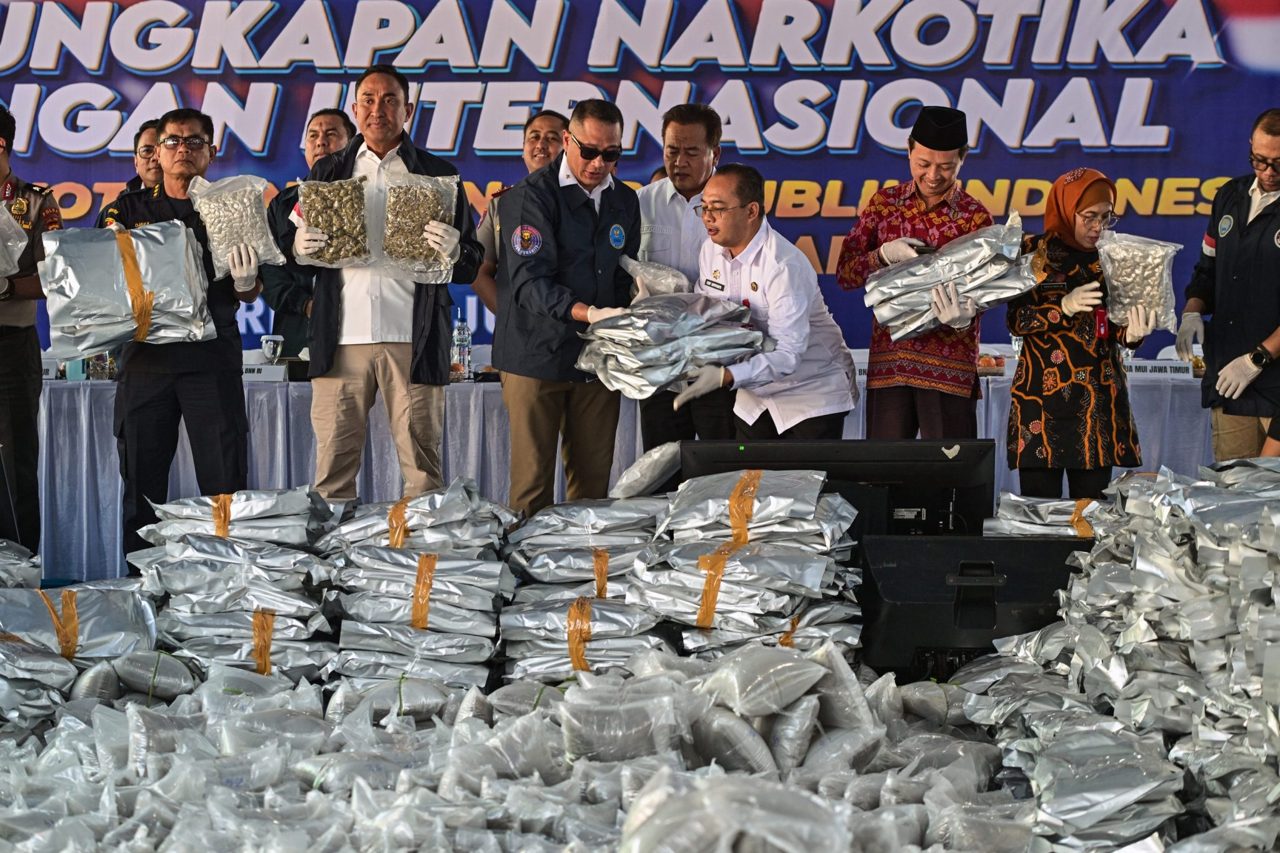
Illicit drug sales across Southeast Asia and neighboring states generate up to $109 billion annually, the U.N. estimates. This includes expanding cannabis export routes from Thailand and Vietnam into Japan and Europe, regions where the substance remains strictly regulated. Seizures of illegal shipments are soaring, highlighted by a record 3-ton haul of methamphetamine, ketamine and ecstasy in Malaysia’s Sabah region earlier this year.
Government crackdowns have so far failed to dismantle the underlying financial and operational infrastructure. While industrial-sized scam centers in Myanmar, Laos and Cambodia have been raided by authorities in Thailand and China, the operations have simply decentralized.
“They were destroyed, but none of the operations stopped,” said Seong Jae Shin, a UNODC counter-terrorism office analyst. Criminals have relocated to villas and underground properties. “It’s much harder for the Cambodian authorities to crack down now,” he added.
The report warns that satellite communications now allow these decentralized scam compounds to operate effectively even in remote or heavily surveilled areas. To protect global financial systems and supply chains, the U.N. urges a coordinated, cross-border enforcement strategy that integrates data, communications and financial monitoring.