CPC oil loadings suspended after drone attacks on Black Sea tankers
Drone strikes on tankers at a Russian port have forced the Caspian Pipeline Consortium to halt crude loadings, threatening a corridor that moves 2% of the world's oil and underpins the output of major Western energy companies.
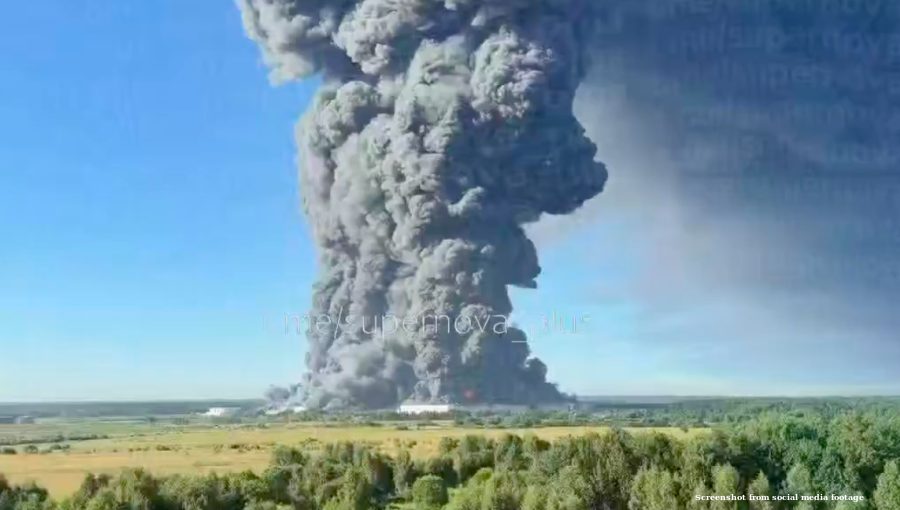
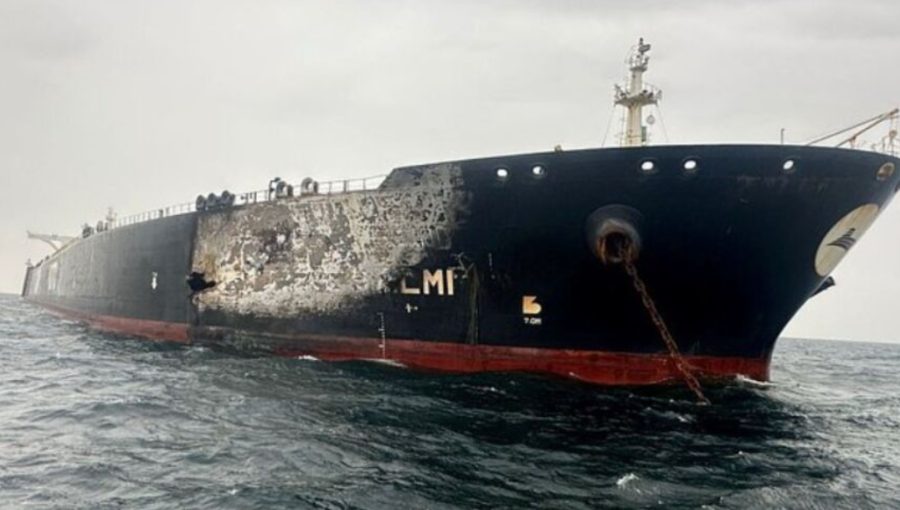
The Caspian Pipeline Consortium has suspended crude loadings at its Black Sea terminal near Novorossiysk after a series of drone attacks targeted tankers in the area. Four separate strikes hit vessels between July 17 and 20, including the Nelsa, the ASIA, and the NISSOS IOS. With storage facilities at the Russian port now full, the consortium has stopped receiving crude from Kazakhstan entirely.
The disruption removes a critical volume from global markets. The CPC route handles around four-fifths of Kazakhstan's oil exports and accounts for roughly 2% of worldwide oil supply. Western energy majors face direct exposure to the bottleneck. A Suezmax-class tanker chartered by ExxonMobil, the Nordic Zenith, was damaged in the July 17 strike. Furthermore, Chevron relies on Kazakhstan for about 20% of its total global production, second only to its US operations.
Ukraine has firmly denied involvement in the incidents. Viktor Mayko, Ukraine's ambassador to Kazakhstan, told The Times of Central Asia that the strikes could be Russian provocations. "I would like to note that the Ukrainian authorities recently warned of the possibility of Russian provocations, including the use of Ukrainian drones," Mayko said. He suggested Russia's electronic warfare systems could intercept and redirect drones to discredit Kyiv.
"Kazakhstan, its citizens, infrastructure, and economic interests have never been, and are not currently, considered military targets by Ukraine. Any attacks on the Caspian Pipeline Consortium infrastructure or other economic and energy assets of the Republic of Kazakhstan are not in Ukraine's interests," Mayko added.
Despite Kyiv's stance, the situation underscores the vulnerability of this export route. In February, the US issued a formal warning to Ukraine over damage to American commercial interests caused by prior attacks on the Black Sea infrastructure used for Kazakh crude. The US holds significant investments in both the CPC pipeline and Kazakh oil production.
Prolonged outages at Novorossiysk would inflict severe financial damage because Kazakhstan lacks workable alternative routes. Carnegie analyst Sergey Vakulenko noted that the country's geography prevents a meaningful pivot away from the CPC corridor.
Diverting flows presents significant logistical and financial hurdles. Elena Lazko, managing partner at S+Consulting, noted that expanding exports via the Baku-Tbilisi-Ceyhan pipeline to Turkey would require pipeline upgrades and a larger Caspian tanker fleet, capping potential at 6 million tonnes per year. While exports to China could rise, profitability from western Kazakh fields would drop significantly compared to the CPC route.
Maksim Shaposhnikov, an adviser at investment fund Industrial Code, offered a more conservative view on China-bound growth, putting it at 3 to 4 million tonnes annually. He estimated Kazakhstan could ship up to 17 million tonnes through Transneft’s system and increase rail exports. However, Shaposhnikov calculated total alternative capacity at just 20 million tonnes per year—nearly three times less than current CPC volumes.
Lazko warned that extended disruptions to the primary corridor could cost Kazakhstan more than $25 billion annually. Such a financial hit would cascade to the international companies operating Kazakhstan's main oilfields, including ExxonMobil, Chevron, TotalEnergies, Eni and Shell.