Astera Labs profit surge highlights AI hardware divergence
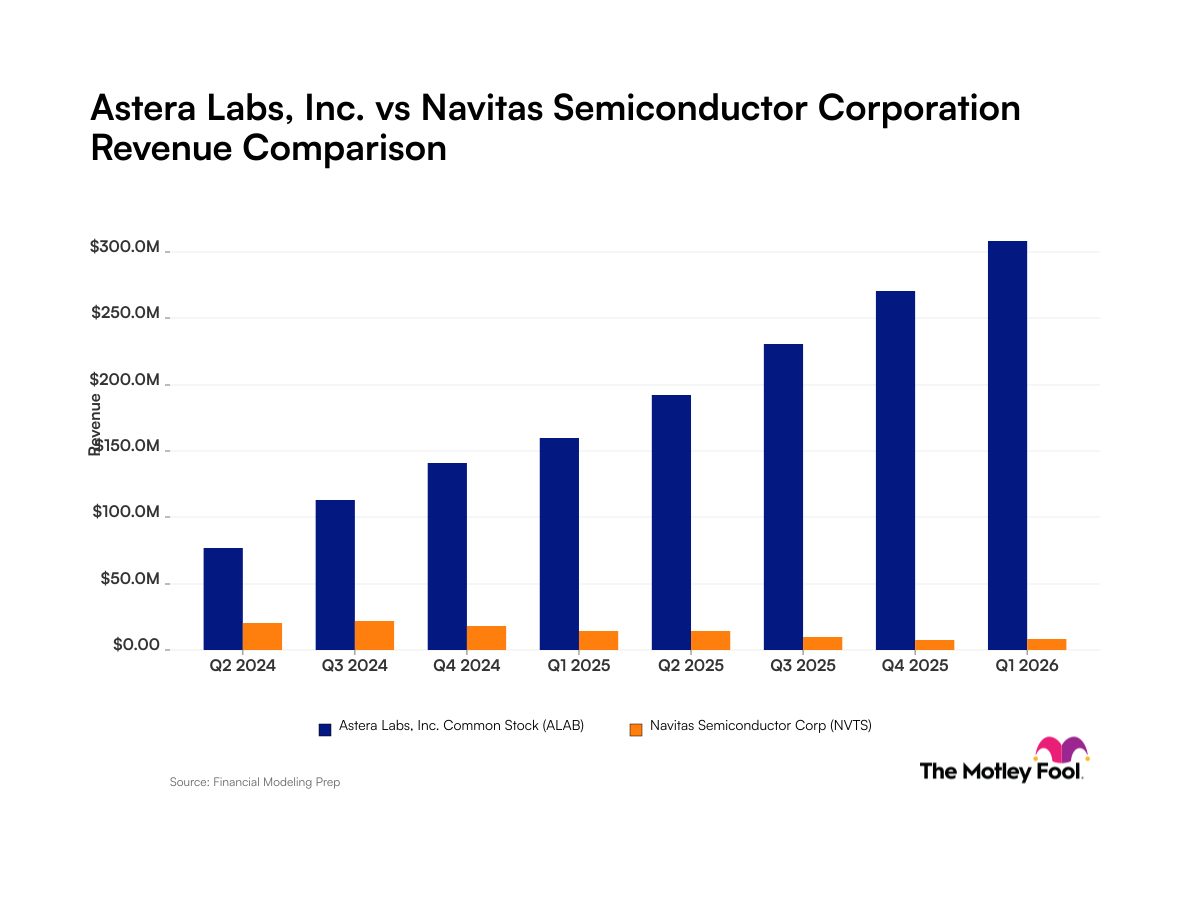
Astera Labs reported a 93% year-over-year revenue surge and a 26% net income margin for the first quarter, contrasting sharply with Navitas Semiconductor's widening losses and legal troubles, underscoring a growing split among companies positioned to serve the artificial intelligence sector.
Astera Labs posted a 93% jump in first-quarter sales, achieving a 26% net income margin for the period ended March 31, 2026. The performance cements the connectivity specialist as a primary beneficiary of the AI infrastructure buildout. In contrast, Navitas Semiconductor reported a negative 318% EBIT margin for the same quarter, revealing deep operational challenges despite its foothold in the power conversion market.
The corporate divergence extends well beyond raw earnings. Astera recently expanded its operations and facilities in Taiwan to integrate its systems with local manufacturers, a strategic move that preceded its addition to the Nasdaq-100 Index. Navitas, meanwhile, is battling a new patent infringement lawsuit filed by Wolfspeed and recently issued earn-out shares to satisfy contingent obligations, further pressuring its financial position.
Both companies are attempting to capitalize on the proliferation of artificial intelligence, but their underlying technologies face vastly different demand curves. Astera’s software-defined architecture directly enables the deployment of high-performance cloud and AI systems at scale, placing it directly in the path of hyperscaler capital expenditure. Navitas relies on gallium nitride power integrated circuits and silicon controllers for power conversion and charging applications. While these components are essential for electronics, this specific market segment has not yet experienced the same explosive, data-center-driven demand as AI compute infrastructure.
For market participants, the contrasting revenue trajectories offer a clear lesson in demand specificity within the broader AI supply chain. Top-line revenue remains an essential metric for evaluating whether a business is actually capturing industry expansion before operating expenses and taxes are deducted. Astera’s ability to translate its 93% sales surge into a 26% net margin indicates highly scalable operations and strong pricing power. Navitas’s severely negative 318% EBIT margin suggests that its cost structure is heavily misaligned with its current revenue reality. This operational inefficiency leaves the semiconductor firm highly vulnerable as it allocates resources to fight its legal disputes with Wolfspeed, proving that an AI-adjacent label is no guarantee of financial success.