Rhine Drought and French Nuclear Cuts Compound Europe Energy Crisis
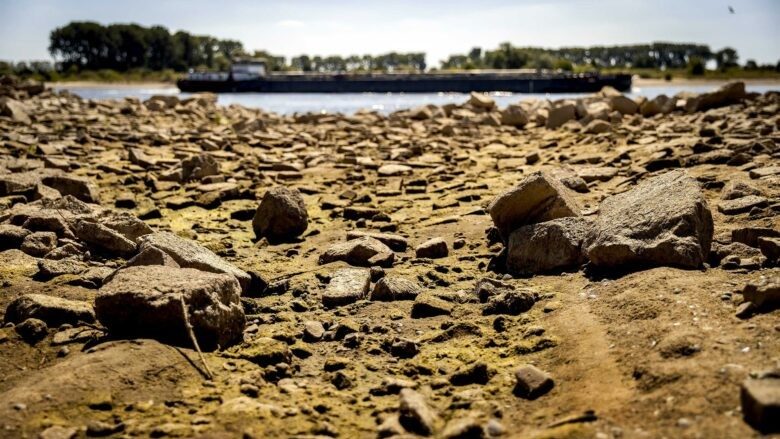
Early summer heatwaves have forced France to curtail nuclear power and disrupted Rhine River shipping, adding fresh inflationary and supply chain pressures to an already strained European energy market.
Severe drought and record-breaking temperatures across Europe are throttling critical energy infrastructure. In Germany, water levels at the Kaub gauge—a key chokepoint on the Rhine River—have fallen to their lowest mid-July level in decades. In France, high river temperatures forced a 6.4-gigawatt reduction in nuclear generation, equating to roughly 14% of daily national demand.
The 800-mile Rhine is the continent's largest inland shipping corridor and a primary artery for petroleum product transportation. The shallow waters at Kaub dictate the maximum weight of barges traveling between the Amsterdam-Rotterdam-Antwerp ports and the industrial heartlands of Germany, France, and Switzerland. Vessels are currently unable to load fully, lifting freight costs for diesel from Rotterdam to southern Germany by more than 50% in the past week.
France continues to export electricity to neighboring countries despite the reactor curtailments, which are necessary because warm rivers cannot adequately absorb the cooling water discharged by nuclear plants. However, these heat-driven output cuts are becoming a recurring pattern rather than an anomaly. Prolonged and more extreme summer heatwaves are making such disruptions increasingly frequent.
For investors and industrial executives, the timing of these physical bottlenecks is highly consequential. The supply chain strains on European inland waterways are converging with the protracted Strait of Hormuz crisis, which has already elevated global energy costs. The last time Rhine levels dropped this critically was during the 2022 energy crisis, and this dual pressure threatens to blunt Germany's recent economic recovery.
The economic toll is already measurable. An analysis by Prognos for Handelsblatt found that the late-June heatwave alone cost the German economy more than €6 billion. Past Rhine droughts offer a stark warning: the Kiel Institute for the World Economy calculated that low water levels in November 2018 reduced German industrial production by 1.5% and shaved 0.4% off national GDP.
Looking forward, the structural threat is escalating. Prognos estimates that three or four annual heatwaves exceeding 35 degrees Celsius could cost Germany €1 billion per day. Under that scenario, annual economic damage could top €20 billion.