ConocoPhillips Takes 42% Stake in BP Iraq Oilfield Venture
ConocoPhillips is acquiring a 42% stake in BP's Kirkuk oilfield subsidiary in a $25 billion rehabilitation project that marks a US strategic push to counter Chinese dominance in Iraqi energy.
ConocoPhillips has agreed to acquire a 42% stake in BP’s Kirkuk oilfield development subsidiary, forming a joint venture to rehabilitate northern Iraq’s historic energy infrastructure. The partnership will oversee a $25 billion program targeting the extraction of more than 3 billion barrels of oil equivalent across four major fields in the region.
The deal structure is designed to limit financial risk for both Western majors during the early stages of rehabilitation. The joint venture will operate as an equity affiliate, meaning neither BP nor ConocoPhillips is required to make significant upfront capital contributions. Instead, their returns will be directly proportional to incremental production volumes and associated costs. Northern Oil Company and Northern Gas Company, the current state operators, will retain active roles alongside the new partners.
The centerpiece of the redevelopment is the super-giant Kirkuk field, discovered in 1927 at Baba Gurgur. While the field holds over 3 billion barrels of initial gross recoverable resources and once produced up to 1 million barrels per day, output has deteriorated significantly. Production currently stands between 285,000 and 330,000 barrels per day, constrained by aging infrastructure and the long-term impact of regional conflict. Most of this output currently serves domestic consumption.
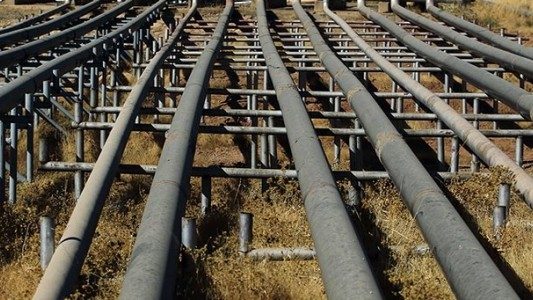
Reviving these volumes will require reliable export routes. Iraq took a major step in this direction in March 2026, when the North Oil Company restarted crude exports of 250,000 barrels per day through the Kirkuk-Ceyhan pipeline to Turkey. This ended a nearly three-year suspension of the critical transit line.
Looking ahead, Baghdad is actively working to eliminate its reliance on single export corridors and strategic maritime chokepoints like the Strait of Hormuz. The government is pursuing multi-government initiatives, backed by the United States, to reconstruct the long-dormant, 800-kilometer Kirkuk-Baniyas pipeline. This route would transit crude directly through Syria to the Mediterranean coast, offering a vital geographic alternative for Iraqi oil.
For ConocoPhillips, the transaction marks a decisive return to Iraq after more than a decade away. The investment aligns with a broader lobbying effort by Iraqi Prime Minister Ali Al-Zaidi, who has actively pitched major energy deals to Western firms like ConocoPhillips and Chevron. The overarching goal for Baghdad is to attract US capital and counterbalance the dominant presence of Chinese firms in Iraq's energy landscape.