Semiconductor selloff and Middle East strikes drive global stocks lower
A deepening semiconductor rout sparked by Chinese AI competition and escalating US-Iran military strikes pushed global equities lower and drove investors toward defensive assets.
Global equities declined sharply on Friday as a three-day semiconductor rout intensified alongside rising oil prices sparked by escalating military conflict in the Middle East. MSCI's global stock gauge fell 1.12% to 1,109.17, reflecting widespread risk aversion as investors absorbed a dual shock to growth and supply chains.
The technology sector bore the brunt of the selling pressure. The Philadelphia semiconductor index dropped more than 2%, extending a losing streak that has dragged it 23.5% below its June 22 record closing high. The losses were most severe in hardware-heavy Asian markets. Taiwan's benchmark plunged more than 6%, marking its worst day since a selloff in April 2025 related to US President Donald Trump's import tariffs. Japan's Nikkei tumbled 4% to trade 12% below its recent peak, and MSCI's broadest index of Asia-Pacific shares excluding Japan finished down 2.7%.
The chip retreat stems from growing skepticism over elevated tech valuations and the long-term sustainability of massive artificial intelligence capital expenditure. Selling accelerated after Chinese AI startup Moonshot released Kimi K3, which it described as the world's largest open-weight AI system. The company claimed the model delivers performance close to Anthropic's frontier models, reigniting competitive fears.
Escalating Middle East conflict
Geopolitical developments provided a second catalyst for the market shift. The United States and Iran expanded their attacks to hit critical infrastructure. US forces struck bridges and an airport in Iran, while Tehran responded by targeting a power and desalination plant in Kuwait. The violence has once again cut off global energy supplies transiting the Strait of Hormuz, where US Marines boarded a tanker and another ship was reported hit by a projectile. Oil prices surged on the news, lifting energy equities.
Flight to safety
The combination of tech unwinding and Middle East escalation triggered a decisive move into defensive assets. Government bonds and utility stocks found strong demand as investors fled risk. "We're seeing a bit of a defensive trade take hold this morning ... and at bottom of the list of sector performance is the AI technology part of the market," said Mona Mahajan, head of investment strategy and asset allocation at Edward Jones. She noted the AI sector had already risen "in a parabolic fashion, and we know those types of trades tend to not last indefinitely."
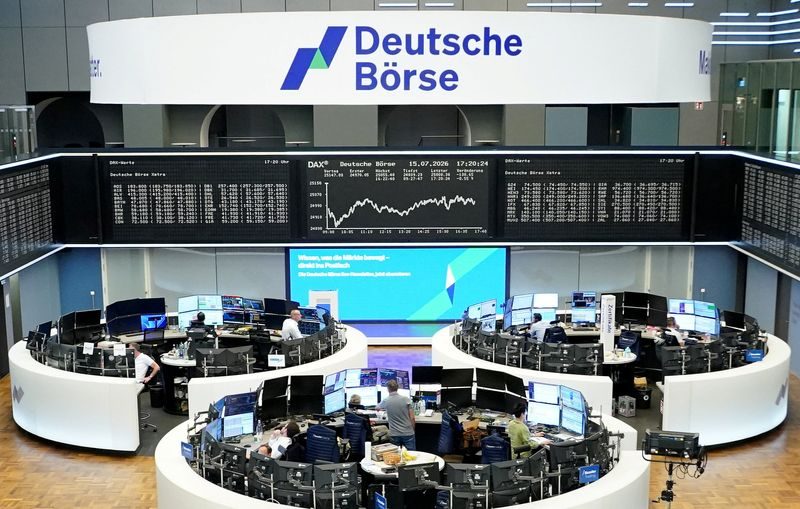
Wall Street mirrored the global downturn in late-morning trading. The Nasdaq Composite led losses, falling 1.62% to 25,463.81, while the S&P 500 dropped 0.85% to 7,469.70. The Dow Jones Industrial Average shed 100.93 points, or 0.19%, to 52,452.04. European markets closed lower ahead of the US session, with the pan-European STOXX 600 index falling 0.61%.