BarMar hydrogen pipeline advances to final design stage
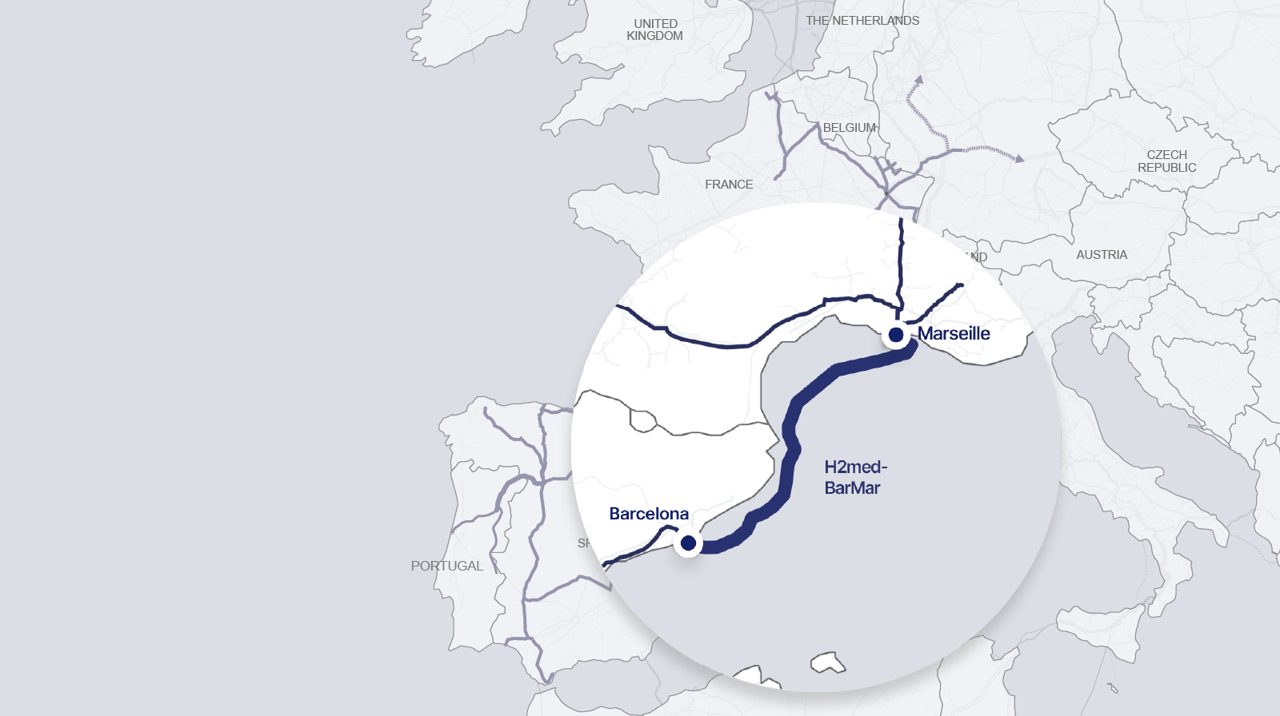
The Spain-France BarMar hydrogen pipeline is entering its final engineering phase, a critical step that will define the project's cost basis and pave the way for a final investment decision ahead of a 2032 launch.
The BarMar hydrogen pipeline has moved into its front-end engineering design (FEED) phase, transitioning the 400-kilometer subsea link from conceptual planning to concrete industrial modelling.
The infrastructure will connect Barcelona to the Fos-sur-Mer industrial hub near Marseille with a transmission capacity of 2 million tons of hydrogen per year. For investors and project finance lenders, entering the FEED phase is a crucial inflection point. It establishes the definitive technical architecture, finalizes the pipeline route, and locks in the compression station layout.
These detailed engineering outputs will construct the technical basis that partners need to approve a final investment decision (FID). The project promoters—transmission system operators Enagás, NaTran, OGE, REN, and Teréga—are currently targeting a commercial operation date in 2032. This gives the offshore supply chain a clear timeline to prepare for heavy fabrication and material procurement.
Early-stage financial de-risking has been supported by Brussels. In January 2025, the European Commission allocated more than €28 million to BarMar under the Connecting Europe Facility. This grant is specifically earmarked to finance the FEED studies, detailed offshore marine surveys, environmental impact assessments, and the complex permitting files required across two jurisdictions.
BarMar represents the core subsea segment of H2med, an initiative launched by France, Spain, and Portugal with German support to establish the European Union’s first major green hydrogen corridor. The broader H2med framework includes the CelZa pipeline connecting Portugal and Spain. The ultimate goal is to transport affordable, renewable hydrogen from the Iberian Peninsula to North-West Europe by the end of the decade.
Regulatory execution remains the primary variable for project timelines. Public consultation processes in France and Spain concluded this month, but the overarching environmental impact assessment is still ongoing. In France, independent guarantors will publish a report containing public recommendations, which the promoters must factor into the final design.