Sensex Jumps 800 Points as Indian Private Banks Rally Ahead of Earnings
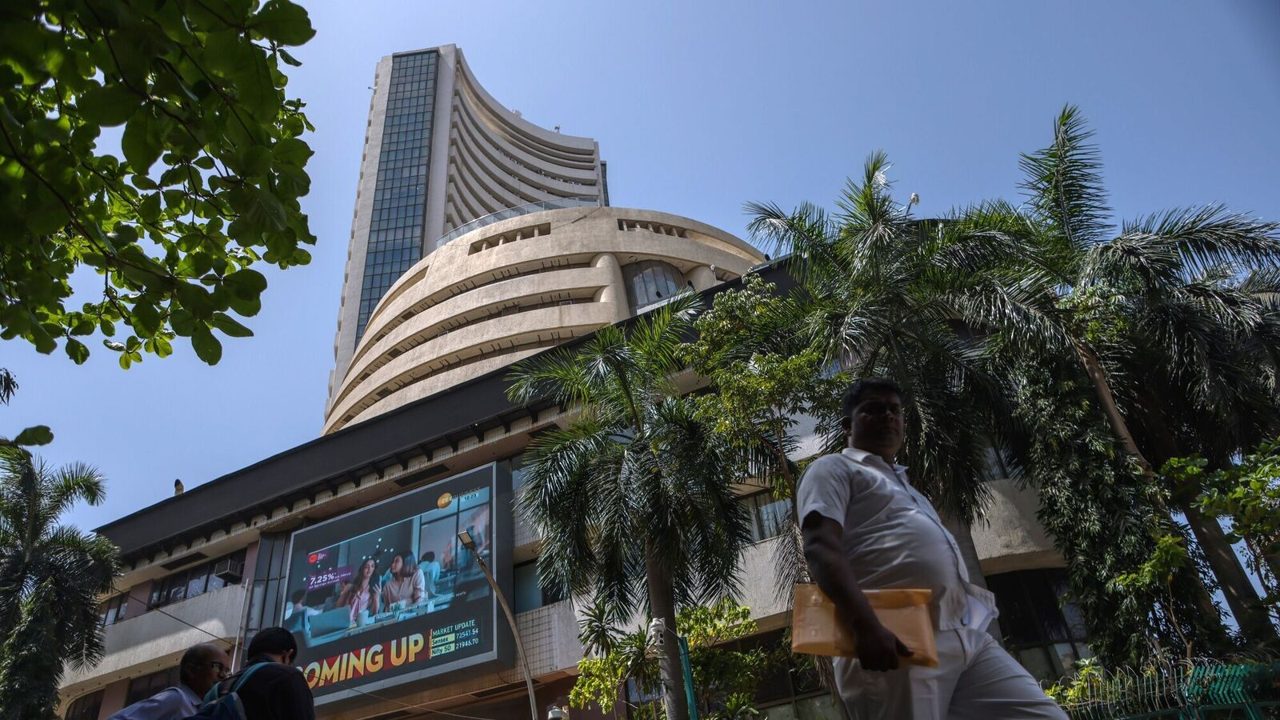
India's benchmark stock indices surged over 1% on heavy private bank and Reliance buying, masking broad weakness in smaller stocks as investors positioned for strong corporate earnings.
India’s benchmark equity indices surged as investors piled into blue-chip stocks ahead of highly anticipated first-quarter earnings. The Sensex jumped more than 800 points, crossing an intraday high of 78,013, while the Nifty 50 climbed over 200 points to reach 24,289.
The rally was narrowly focused on index heavyweights, leaving the broader market behind. Escalating US-Iran tensions and rising crude oil prices weighed on sentiment, pushing the Nifty Midcap 100 and Smallcap 100 indices down by as much as 1%. This dynamic highlights a rotation toward safety, with capital retreating to mega-caps during macro uncertainty.
The gains were led by Reliance Industries and India's major private lenders. Reliance is scheduled to report its June quarter results shortly, with HDFC Bank, ICICI Bank, Kotak Mahindra Bank and Axis Bank set to follow.
The banking sector showed clear divergence within its own ranks. The Nifty Private Bank index soared 1.5% and the Bank Nifty added 1%, but state-run lenders lagged, with the Nifty PSU Bank index slipping 0.30%.
Brokerages expect the private banking sector to deliver robust numbers driven by strong credit expansion. According to Anand Rathi Share and Stock Brokers, sectoral credit growth stood at 17.7% year-on-year as of June 15, 2026, supported by industrial and gold loans. Deposit growth tracked near 12% year-on-year.
Earnings estimates from Motilal Oswal Financial Services project a 10.1% year-on-year increase in profit after tax for private banks, though this represents a 1.7% decline from the previous quarter. The brokerage forecasts a 20% earnings compound annual growth rate for private banks over the FY26-28 period. For public sector banks, Motilal Oswal estimates a 9% year-on-year profit increase and a 6.6% sequential drop.
For market professionals, the session underscores a defensive posture. As geopolitical risks elevate oil prices and pressure smaller companies, institutional capital is concentrating in the largest, most liquid names with predictable earnings trajectories.