Pemex fuel theft losses fall 30.3% as tax evasion hits $9.2bn
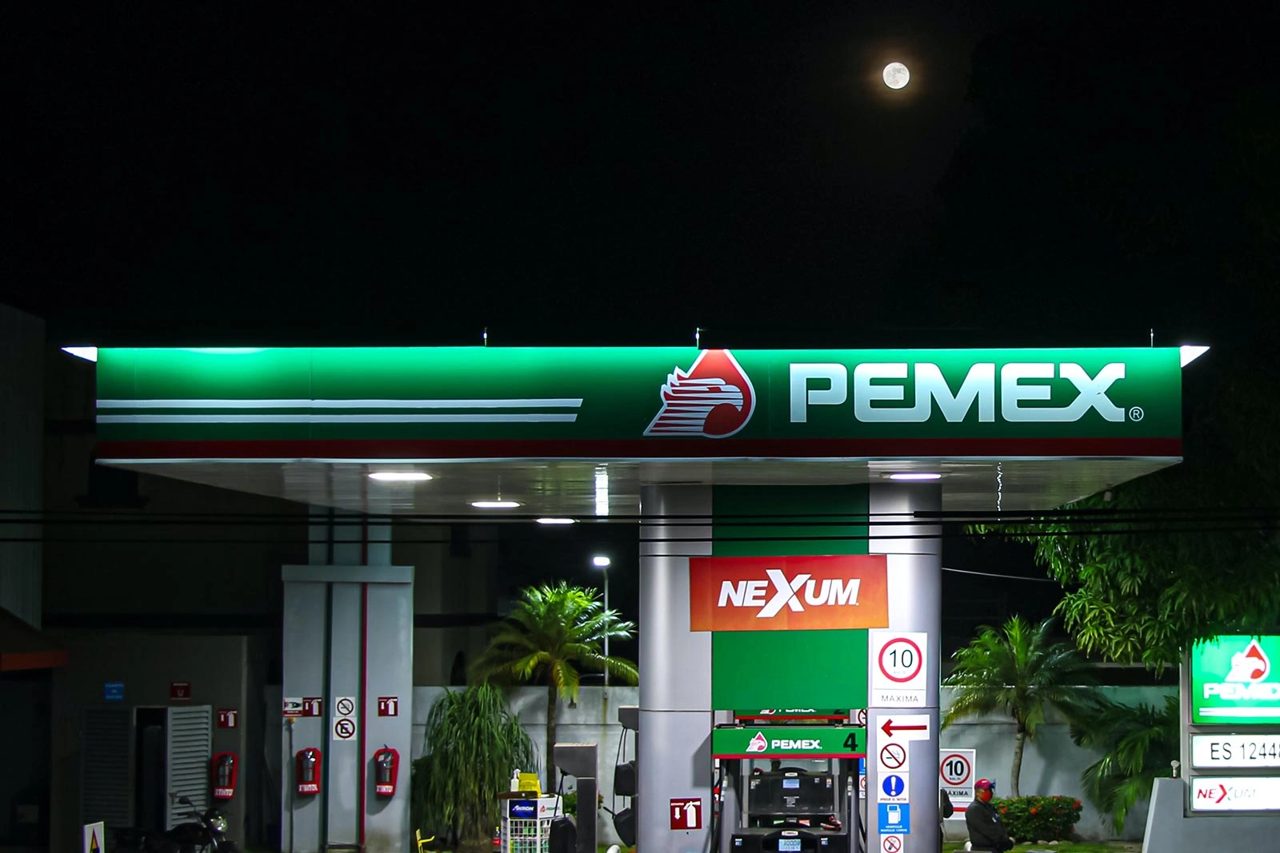
A 30.3% drop in Pemex’s financial losses from fuel theft masks a structural shift toward sophisticated tax evasion schemes that cost the Mexican government $9.2 billion last year and severely distort the retail fuel market.
Pemex reported a 30.3% year-on-year drop in financial losses from fuel theft, attributing the improvement to a coordinated crackdown by Mexico’s Financial Intelligence Unit (UIF) and the National Banking and Securities Commission (CNBV). The authorities have systematically targeted the banking networks supporting the illicit trade, blocking 811 accounts holding 466.6 million pesos and $28,000. UIF chief Santiago Nieto noted that a large share of gas stations situated near pipelines have been identified as selling stolen product.
However, the headline financial improvement obscures a rise in actual physical theft. Pemex’s 2024 annual report filed with the U.S. SEC shows stolen hydrocarbons averaged 17,000 barrels per day last year, up from 15,400 barrels per day in 2023. The state oil company still booked 20.53 billion pesos in theft losses for the year, a sum equivalent to a major infrastructure investment.
For investors and macroeconomic analysts, the more pressing concern is the evolution of the illicit fuel trade into a sophisticated tax fraud known as huachicol fiscal. Rather than physically tapping pipelines, criminal networks now smuggle undeclared gasoline and diesel across borders to evade the Special Tax on Production and Services (IEPS). According to FTI Consulting, this shifts the financial damage away from Pemex’s balance sheet and directly onto federal tax revenues.
The scale of this white-collar evasion is staggering. The Tax Administration Service (SAT) estimates the fiscal gap from illegal fuel imports reached 177 billion pesos, or roughly $9.2 billion, in 2024 alone. Cumulative uncollected revenue between 2018 and 2024 exceeded 809.324 billion pesos, nearly twice the total cost of the Dos Bocas refinery.
Illegal fuel now accounts for approximately one-third of Mexico’s domestic market, creating severe pricing distortions for compliant retailers. The Observatorio Ciudadano de Energía values the total economic impact of fuel theft and contraband at 123.543 billion pesos in 2025. This equates to 2.3 times the national budget for public security and 85% of the transport sector’s annual budget.
The UIF’s financial tracing—which has followed at least 10 billion pesos in laundered fuel money—remains the government’s primary mechanism to shield legitimate market participants from unfair competition. President Claudia Sheinbaum has linked rising Pemex fuel sales to progress against both physical theft and tax-evasion imports. Customs agency ANAM, led by Rafael Marín Mollinedo, claimed up to 200 billion pesos in recovered fiscal revenue in 2025, targeting 300 billion by year-end.
Yet, ANAM acknowledges that billions continue to slip through. Security analysts warn that while traditional pipeline tapping drives territorial cartel violence, huachicol fiscal represents a deeper institutional corruption. At roughly 0.6% of GDP, the ongoing tax drain fundamentally constrains Mexico’s broader public spending capacity.