Visma deploys 600 AI initiatives to decouple accounting growth from headcount
European software group Visma is pushing agentic AI across its portfolio to fully automate bookkeeping, a shift that promises to let accounting firms scale revenues without adding staff.
Visma is advancing more than 600 artificial intelligence initiatives across its portfolio, prioritizing systems that automate entire financial workflows rather than just assisting them. The software group, which provides accounting, payroll, and tax tools to small and medium-sized businesses, is splitting its projects between early experiments and those ready for group-wide deployment.
The push reflects a broader European investment boom. Startups in the agentic AI space raised €6bn last year and have already secured €4.6bn so far this year, placing them on track to surpass 2026 figures. Capital is flowing specifically into financial automation, with Spanish treasury startup Embat closing a €30m round in May and Milan-based JetHR securing €25m in June.
For investors, the critical metric is how this technology alters the operating leverage of professional services firms. Mikael Gandon, managing director of Visma-owned Chaintrust, noted that automating data extraction and ledger entries allows a firm to expand its client base without a proportional increase in headcount. “A firm can grow its client portfolio without growing headcount linearly, and staff can shift from typing tasks to reviewing and advising,” Gandon said.
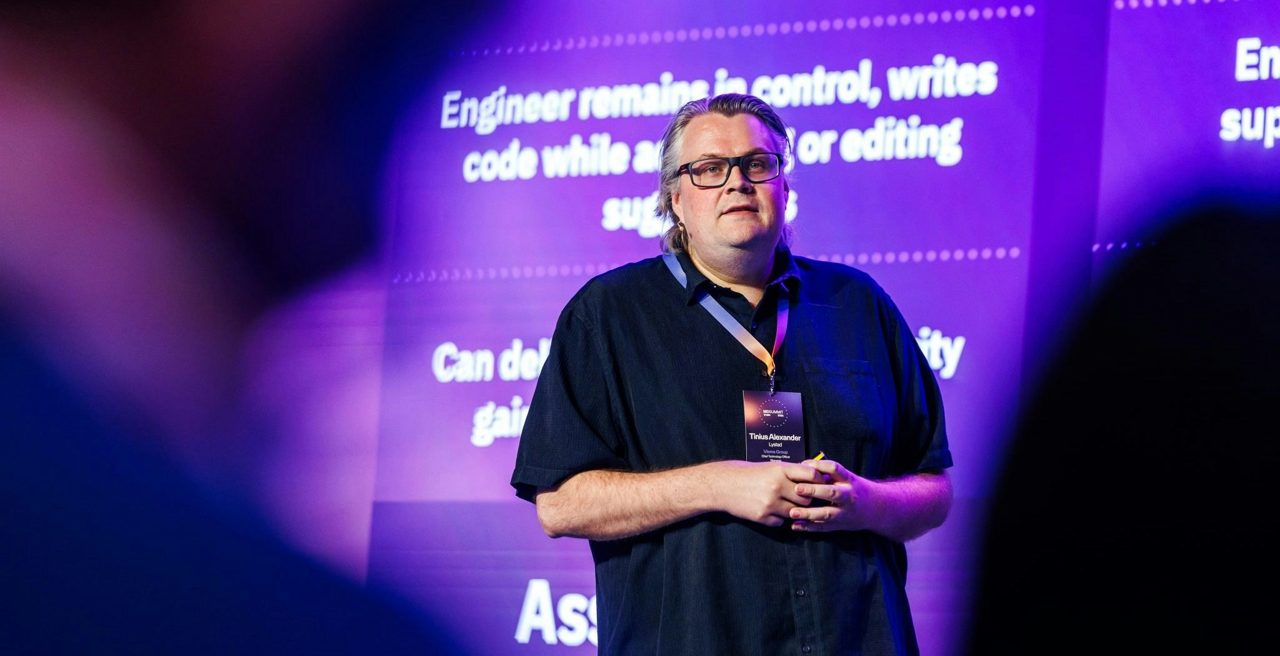
Visma’s acquisitions target this specific leverage. Chief technology officer T. Alexander Lystad said the company does not require targets to be profitable, but demands proof of high product engagement. Once acquired, portfolio companies deploy AI tailored to local regulations. Dinero, another Visma company, has built a virtual CFO that connects to business bank accounts via open banking to predict payment timings and audit supplier concentration. “The idea is to give small companies their own virtual CFO to make it easier for them to compete with larger companies. We want to make bookkeeping less painful,” said managing director Martin Thorborg.
However, deploying generative AI in highly regulated finance carries distinct risks. Dinero restricts generative models to advisory features, relying on strict machine learning algorithms for core bookkeeping to prevent hallucinations. The company runs roughly 20,000 tests with every software update to ensure compliance. “Other companies could be more aggressive, but it comes at a price. If the advice you’re getting is wrong because of AI, then it's hard to win people back,” Thorborg said.
Ultimately, Visma views AI not as a premium feature, but as a baseline infrastructure upgrade. Lystad predicted the technology will fade from marketing discourse as it becomes standard. As routine entry work disappears, the value proposition of the accountant shifts permanently. “The accountant's value shifts from producing the books to interpreting them," Gandon said.