Walker's $1m Derby win yields 125% pay rise on rookie contract
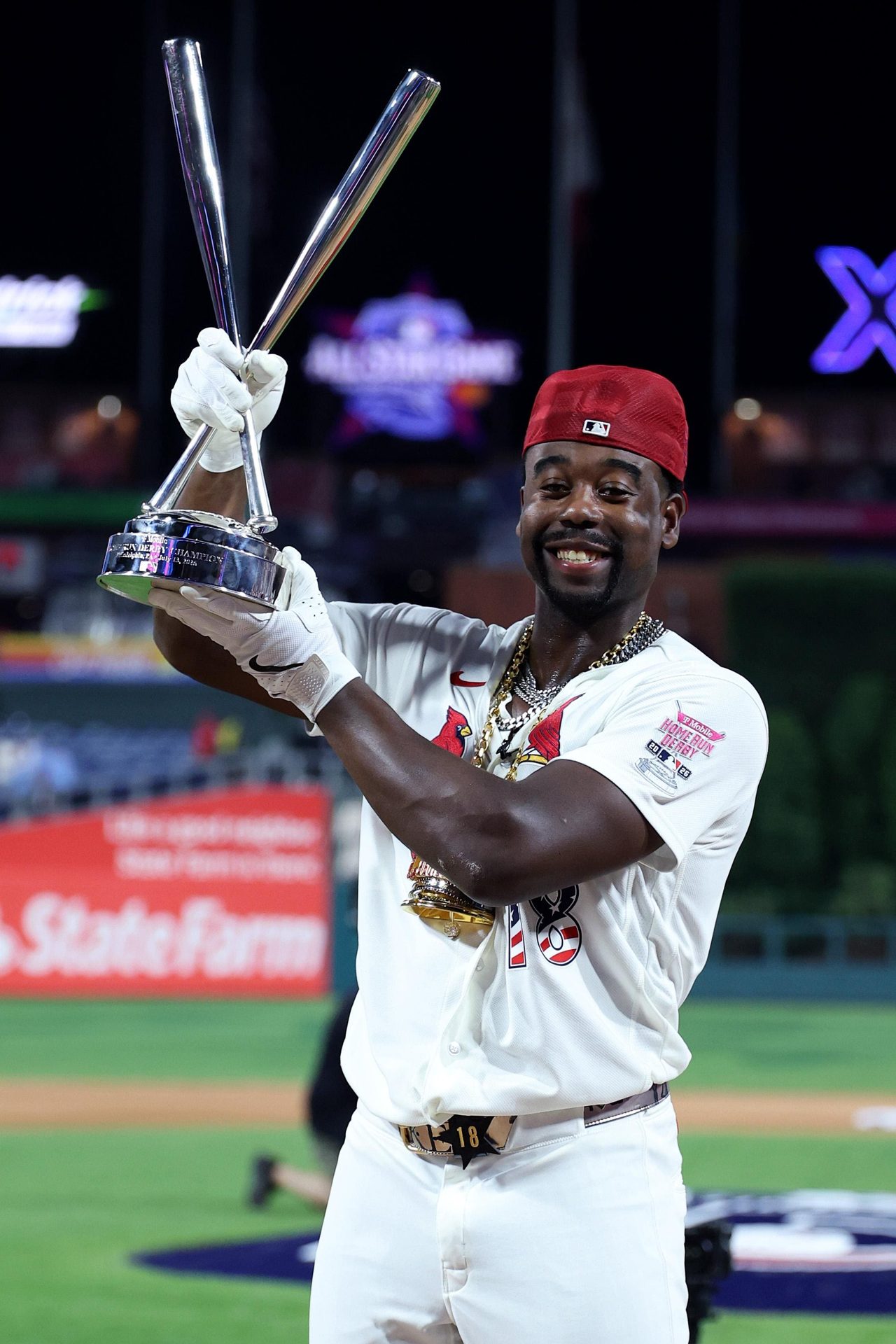
St. Louis Cardinals outfielder Jordan Walker captured the $1 million Home Run Derby prize, highlighting the stark financial impact of flat-dollar performance bonuses on lower-earning rookie contracts compared to veteran megadeals.
St. Louis Cardinals outfielder Jordan Walker won the 2026 Home Run Derby in Philadelphia, securing a $1 million prize that represents a 125% increase to his $799,400 base salary this season. Walker defeated the Phillies' Kyle Schwarber in the final round by leveraging a new format rule that grants additional swings if a player homers on their final attempt.
The victory underscores the outsized financial value of ancillary competition prizes for athletes on rookie-scale contracts. For Walker, the $1 million payout fundamentally alters his annual compensation. By contrast, Schwarber stood to gain only a marginal 3% increase to his $30 million annual salary had he won, given his current five-year, $150 million contract, which followed a prior four-year, $79 million deal.
This compensation asymmetry extended beyond the championship prize. Tampa Bay Rays infielder Junior Caminero earned a separate $100,000 bonus for hitting the longest home run of the night at 491 feet. Because Caminero is playing on a salary of $794,800, that single swing translates to a 12.5% pay increase. Boston's Willson Contreras, earning $18 million this year, temporarily held the distance lead at 490 feet but lost the bonus to Caminero by a single foot. For Contreras, the missed bonus equated to a forgone raise of just 0.55%.
The Derby, broadcast for the first time on Netflix, drew more than 43,000 fans to Citizens Bank Park. Walker entered the final round trailing Schwarber's total of 11 home runs with only three swings remaining. He forced a tie by homering on his 15th and final regulated swing, triggering the new continuous play rule, before ultimately launching the game-winning shot into the left field bleachers. The hostile Philadelphia crowd, which booed opposing players throughout the three-hour event, ultimately voiced its approval for Walker's clutch performance.
For Major League Baseball and its broadcast partners, the new format successfully generated a dramatic conclusion. For executives tracking player compensation structures, however, the event served as a stark mathematical illustration of how flat-dollar performance incentives disproportionately benefit early-career players compared to established veterans locked into guaranteed megadeals.