Brazil's $294m river fiber grid draws cross-border links
Brazil is building a $294 million fiber-optic network along Amazon riverbeds, drawing interest from Colombia and Peru to create a new Pacific data route that mitigates a critical regional traffic bottleneck.
Brazil is laying a 13,200-kilometer fiber-optic network along the beds of Amazon rivers, a $294 million infrastructure project that has already connected nearly half of its planned routes. The programme, called Norte Conectado, threads nine routes through six northern states, from Acre to Roraima.
The rollout is funded by 1.5 billion reais paid by telecom operators as a condition of Brazil's 2021 5G spectrum auction. Now, the country's main operators have been cleared to participate directly, layering private capital and commercial reach on top of the state-led construction.
The project's strategic value is already reshaping regional infrastructure planning. Colombia and Peru have approached Brazil to integrate their border networks into the Amazonian grid. The immediate prize is a new data route to the Pacific, offering an alternative path that does not funnel through Brazil's northeast coast.
This cross-border integration addresses a major vulnerability for international data traffic. Today, the bulk of Brazil's international internet enters through one concentrated coastal stretch. Linking the three countries via a shared Amazon backbone would eliminate that dangerous single point of failure, providing essential network redundancy.
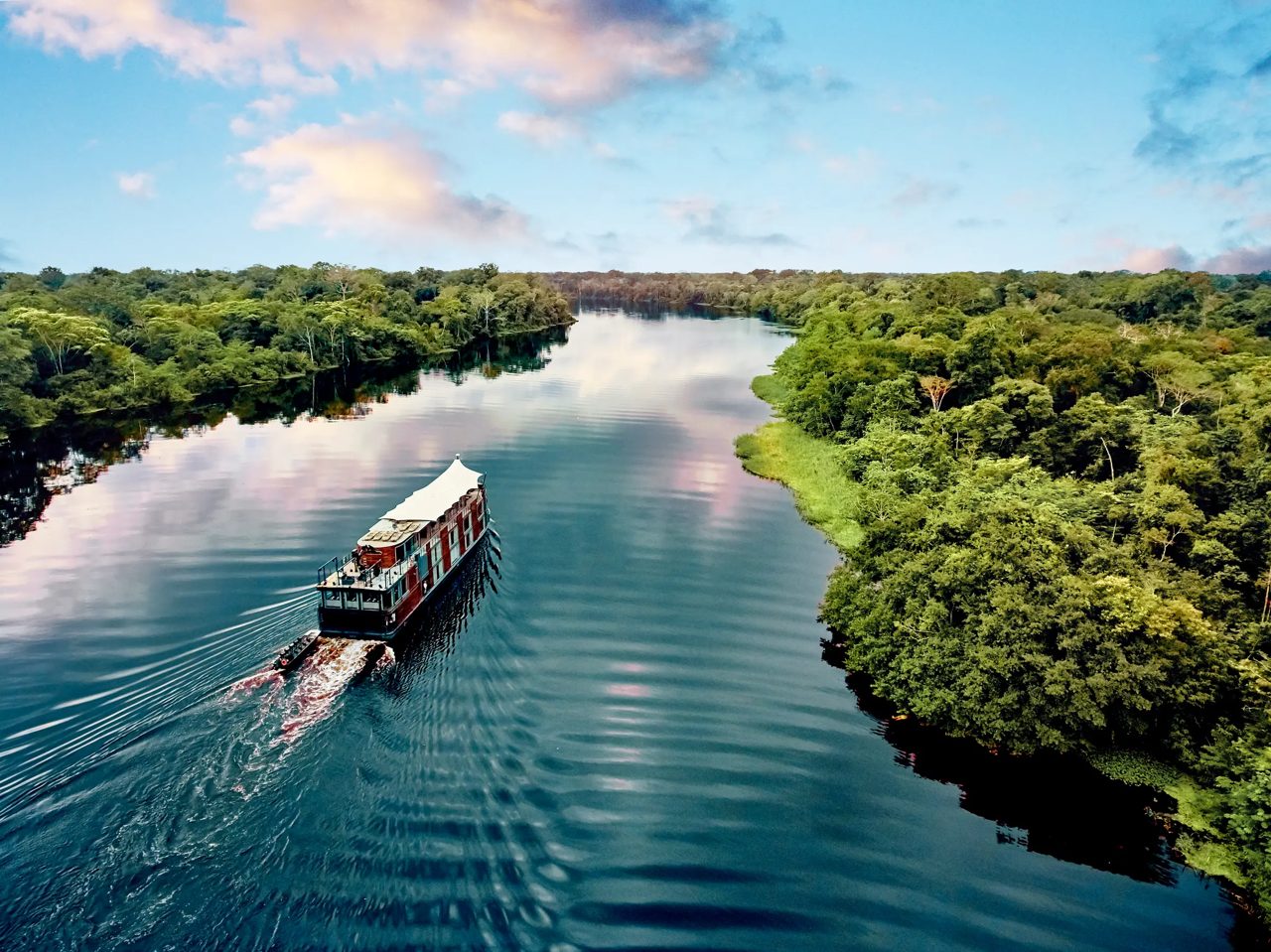
Engineering the network involves severe logistical challenges. Crews working from barges must navigate currents, shifting sandbanks, and depth swings of up to eighteen metres between flood and drought seasons. While riverbed cable is usually limited to short distances, this project runs for thousands of kilometres.
Five of the nine routes are now complete, covering roughly 5,800 kilometres to reach 70 remote locations and about 7.5 million people. However, successive droughts that dropped river levels have pushed back the original 2025 completion target, underscoring the physical risks of waterway infrastructure.
The capacity being deployed is substantial. Each cable contains dozens of fiber pairs, leaving ample room for future demand. For the region, the network replaces patchy satellite and radio links with terrestrial fiber, serving as critical plumbing for public services, mobile coverage, and border security operations targeting illegal mining.