German wind and solar output exceeds fossil fuels for first time
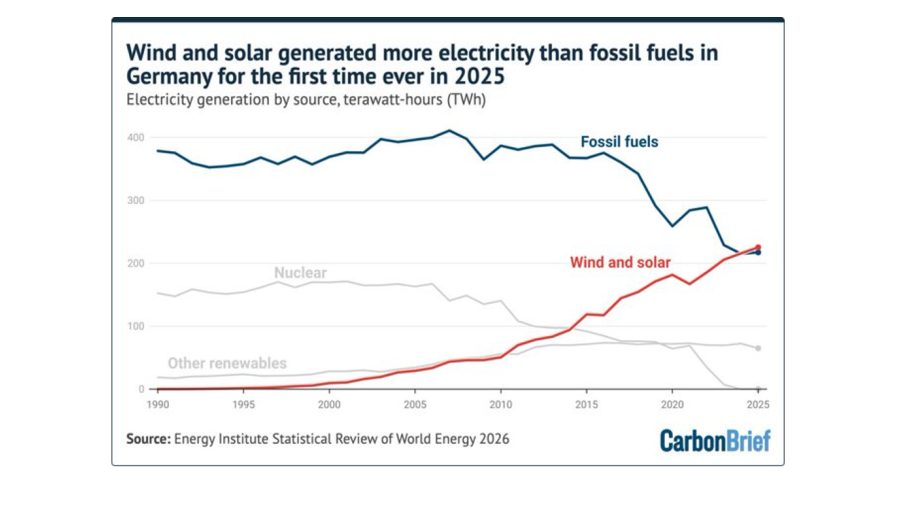
Wind and solar generated 44% of Germany's electricity in 2025, surpassing fossil fuels for the first time and signalling a structural shift in Europe's largest power market that demands massive continued capital deployment.
Germany’s power grid crossed a historic threshold in 2025 as renewable sources generated more electricity than fossil fuels. Wind and solar produced 225 terawatt hours (TWh) last year, capturing 44% of total generation compared to 43% from fossil fuels at 217 TWh. The milestone, shared with the broader European Union, confirms the success of two decades of growth under the "Energiewende" strategy.
For investors and power market participants, the shift highlights the sheer scale of infrastructure buildout still required to meet binding climate targets. Berlin approved a record 20.8 gigawatts (GW) of new onshore wind capacity in 2025 alone as it chases an aggressive 115 GW target by the end of the decade. Reaching an 80% renewables share of electricity consumption by 2030 demands sustained capital flows into grid expansion, storage solutions, and turbine supply chains.
The transition is forcing Germany to lean more heavily on variable renewables than neighbours like France or the UK precisely because of its nuclear phaseout. Chancellor Friedrich Merz recently described that decision as a "strategic mistake," yet his government has firmly ruled out a return to conventional nuclear power. Coal presents a more immediate market variable, as Germany still depends on it far more than most of Europe, though experts now expect its elimination from the power supply years ahead of the official 2038 deadline.
Filling the baseload gap left by departing coal and nuclear plants requires new flexible generation. To balance a grid increasingly dominated by intermittent wind and solar, the current coalition is simultaneously backing new gas-fired power plants as a legislated bridge technology. By law, these facilities must convert to run on green hydrogen by 2045 to stay aligned with the economy-wide net-zero target, creating a specific investment pathway for gas infrastructure that faces a strict technological pivot.
The sector's trajectory is not without political risk, which could alter project risk profiles. While few outside the far-right Alternative for Germany (AfD) are calling to halt the transition entirely, the party's mounting resistance to renewables adds friction to local permitting and project development. Market participants will closely scrutinise a government review of transition timelines due in August, which will serve as the next major test of Berlin's commitment to achieving a largely climate-neutral power system by 2035.