Leveraged ETF Volatility Repels Funds From Record-Cheap Korea

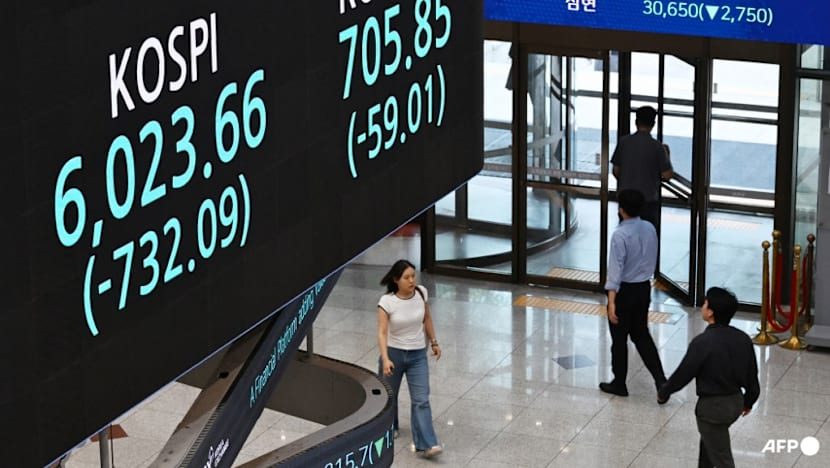
A record 33% plunge has left South Korean equities at their cheapest valuations ever, but extreme volatility driven by leveraged exchange-traded funds is keeping global investors away.
South Korea’s Kospi has suffered a record 33% drop in July, dragging its price-to-earnings ratio below six times forward earnings—a record low. Despite these historically cheap levels, global funds have pulled a net $12 billion from the market this month.
The exodus highlights how extreme price swings have eclipsed fundamental value as the primary concern for institutional portfolio managers. The market has triggered nine circuit-breaker halts, each caused by drops of at least 8%. The Kospi 200 Volatility Index has tripled since December to reach 87.
This turbulence stems largely from the market’s heavy concentration in two AI chip leaders, Samsung Electronics and SK Hynix. The situation is compounded by retail margin loans, which fell 14% from their peak to 33.2 trillion won ($23 billion) by July 28, and the proliferation of leveraged ETFs tied to those two stocks.
Major asset managers are actively avoiding the temptation to buy the dip. “As an institutional investor investing in the global equity market, I think the biggest problem for Korea is volatility is too high,” said Young Jae Lee, senior investment manager at Pictet Asset Management. “We can’t just put [money] into a very gambling type of situation.”
Robeco and Eastspring Investments share this hesitation. Joshua Crabb, head of Asia Pacific equities at Robeco, said the firm is “waiting for it to stabilize a little” despite acknowledging attractive valuations. Fidelity International’s Ian Samson noted that the volatility forces strict position sizing. “It has made it more difficult to buy the dip in Korea where you’re seeing interesting levels,” Samson said.
Not everyone is sitting on the sidelines. Federated Hermes is adding exposure to the memory sector, favoring Samsung. “Our preferred exposure is to Samsung because it is the cheapest large cap AI stock globally,” said Jonathan Pines, head of Asia ex-Japan equities. “If the AI memory bubble bursts, its cheap price should offer a measure of protection.”
Korean authorities are moving to address the structural drivers of the crash. Following an emergency meeting on Wednesday, the government announced plans to limit retail involvement in leveraged ETFs by capping exposure as a set share of portfolios. However, Pictet’s Lee warned that foreign and institutional investors may keep selling “unless volatility normalizes.”