South Korea’s Kospi Drops 43% From Peak as Chip Volatility Triggers Trading Halt
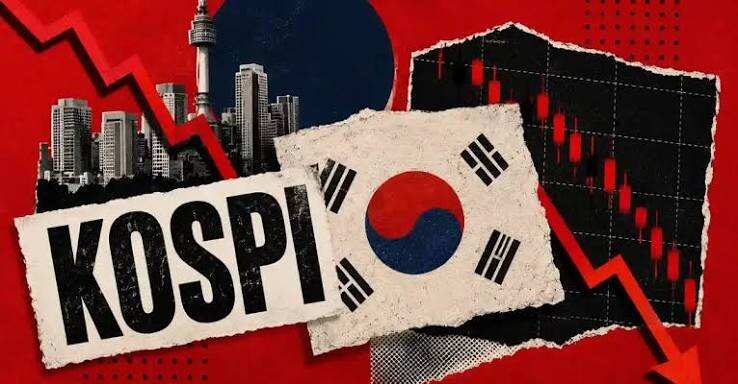
South Korea’s benchmark index has entered a technical bear market after chipmakers missed lofty AI-driven expectations, prompting government intervention and forcing global investors to reassess their emerging market allocations.
South Korea’s Kospi index dropped to 5,311.77 on Wednesday morning, marking a decline of more than 43 percent from its June peak of 9,386. The sharp selloff confirmed the market’s entry into technical bear territory and triggered a routine 20-minute trading halt.
The rout was catalyzed by SK Hynix, which reported a six-fold jump in earnings that included a $44 billion asset-value gain. Despite the massive profit increase, the results fell short of the sky-high market estimates fueled by the artificial intelligence boom.
SK Hynix shares tumbled over 14 percent, dragging Samsung Electronics down 10 percent in sympathy. Together, these two semiconductor giants account for nearly half of the Kospi’s total weight and have driven roughly two-thirds of the index’s gains this year.
Seoul is now scrambling to contain the fallout and protect investor wealth. Finance Minister Koo Yun-cheol announced that authorities are reviewing market stabilization measures, specifically targeting regulations around single-stock leveraged exchange-traded funds.
President Lee Jae Myung acknowledged the turbulence, stating, “Our domestic stock market is quite unstable.” He noted that the historically unprecedented surge in valuations would naturally require time and fluctuation to stabilize.
Regulators had already moved earlier this month to cool speculative fever by banning new listings of leveraged ETFs tied to individual stocks. This abrupt intervention arrived just two months after the financial watchdog initially approved such investment vehicles.
Nomura attributes the heavy correction to aggressive foreign selling, slowing institutional support, and the amplified volatility from rapid leveraged ETF growth. The brokerage expects the market to eventually re-rate toward a 10,000 to 11,000 target as deleveraging progresses and large-cap share buybacks provide structural support.
Eurasia Group analysts argue that Seoul must learn to live with this volatility, noting that large daily fluctuations remain divorced from record-high corporate profits. Meanwhile, Citi has downgraded South Korean equities to neutral from overweight due to AI-linked chip volatility, shifting its emerging markets tactical exposure toward Taiwan and China.