Drone Attacks Force Halt to 1.4 Million Bpd Kazakh Oil Exports to Europe
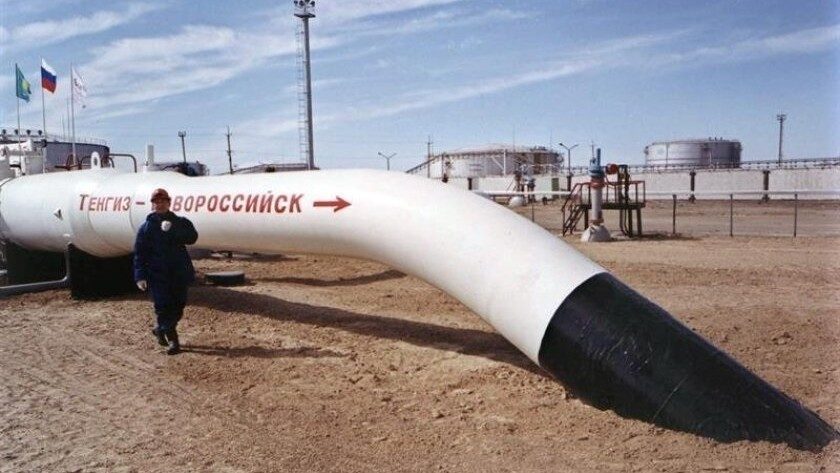
The Caspian Pipeline Consortium has stopped accepting crude after drone attacks made the Black Sea terminal too risky for major shippers, threatening Mediterranean supply and exposing a critical flaw in Central Asian energy logistics.
The Caspian Pipeline Consortium stopped accepting crude from Kazakhstan on July 21 after a series of Ukrainian drone attacks on the Black Sea port of Novorossiysk made the route commercially unviable. Although the terminal infrastructure remains physically intact, tanker owners and charterers—including ExxonMobil and Chevron—have refused to call at the port due to the risk to vessels and crews. As of July 23, there was no authoritative confirmation of a restart.
The suspension immediately cuts off 1.42 million barrels per day of Kazakh crude from European markets. The disruption threatens to tighten Mediterranean supply, particularly at Italy’s port of Trieste, which relies on a steady 300,000 b/d flow to supply Austrian, Czech and German refiners. Finding replacement barrels will be difficult because CPC Blend is a light but relatively sour crude, requiring specific desulphurisation capacity that alternatives like Azeri Light lack.
Higher regional crude differentials are inevitable, but Kazakhstan will not capture the price upside because its barrels cannot reach the market. Instead, alternative suppliers such as Libya and Azerbaijan are positioned to fill the shortfall. Together, CPC and the KEBCO grade accounted for nearly 15% of EU crude imports in June, highlighting the scale of the supply vacuum.
Kazakhstan’s vulnerability stems from an acute lack of export diversification. The CPC route handles 80% of the country’s crude exports. Alternative corridors are structurally inadequate: the Atyrau-Samara pipeline handles just 220,000 b/d and still relies on Russian ports, while the Kazakhstan-China pipeline is already integrated into regional flows. The most viable non-Russian route, crossing the Caspian Sea to the Baku-Tbilisi-Ceyhan pipeline, handles a mere 30,000 b/d due to shallow waters that restrict ship sizes to 10% of a standard Suezmax load.
The export bottleneck is compounding severe production problems at Kazakhstan’s major fields. Tengizchevroil has halved output at the giant Tengiz field to 406,000 b/d, down from a July average of 925,000 b/d. A separate drone strike on Russia’s Orenburg gas processing plant in late June forced the Karachaganak field to cut liquids output by roughly 70,000 b/d. Overall, national crude production has plummeted to 1.63 million b/d from 2.07 million b/d.
For investors and credit analysts, the overriding risk is fiscal. Oil revenues support roughly half of Kazakhstan’s state budget, yet the country is paralysed by Soviet-era infrastructure that makes it collateral damage in a conflict beyond its borders.