Hungary unveils €9.7bn rail upgrade backed by EU funds
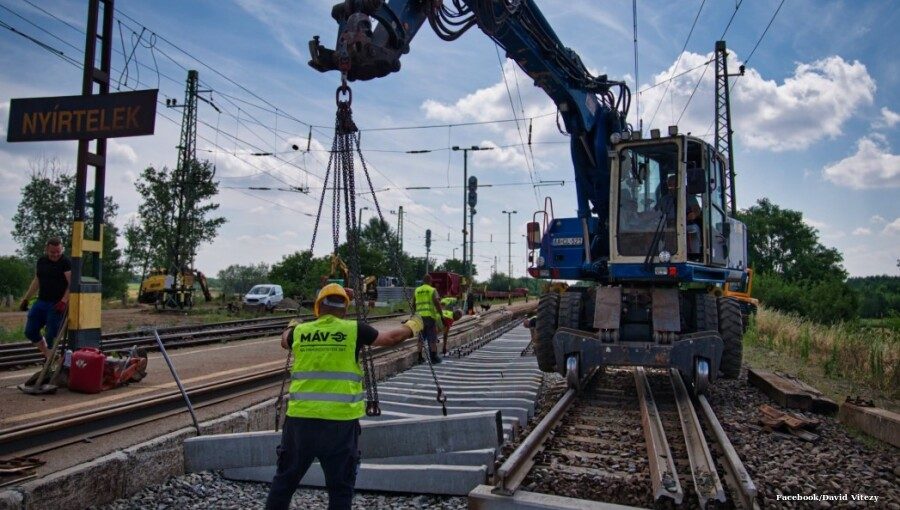
Hungary's new government has announced a €9.7bn decade-long rail modernisation programme largely financed by newly unlocked EU funds, creating significant procurement opportunities for rolling stock manufacturers and infrastructure contractors.
Prime Minister Peter Magyar and Transportation Minister David Vitezy presented the framework on July 22. The ten-year programme commits HUF3.5 trillion to modernising the country's railway network through 2035.
The funding structure underscores a thaw in Budapest's relations with Brussels after years of rule-of-law disputes that froze funds under the previous administration. The plan relies on HUF1.1 trillion in EU cohesion funds and HUF700bn from the EU's Recovery and Resilience Facility. Additional capital includes HUF400bn in European Investment Bank loans, HUF400bn via concessions, and HUF950bn earmarked from the 2028-2034 EU budget cycle.
For industrial suppliers, the programme outlines concrete procurement targets to reverse decades of underinvestment. The state intends to purchase at least 35 new InterCity trainsets and 42 new suburban HEV trains. Infrastructure firms will also compete to refurbish the country's ten busiest railway stations and construct a rapid rail link between Budapest's Liszt Ferenc International Airport and the city centre.
The capital injection targets severe bottlenecks that have constrained logistics and labour mobility. Magyar noted the average rolling stock age is 43 years, almost half of passenger seats lack air conditioning, and 40% of the network faces speed restrictions, while a quarter of state railway MAV's vehicles are out of service. By raising main line speeds to at least 100 km/h and expanding electrification, the government aims to shift freight traffic from roads to rail.
Delivering the programme will require managing significant short-term disruption. Vitezy acknowledged that major reconstruction works on four or five main lines could temporarily impact services, though he argued these investments would establish a foundation spanning multiple government terms. The initiative marks a stark reversal from the previous Fidesz administration, which critics say allowed the network to fall behind regional peers.
Poor transport infrastructure, alongside declining healthcare and education, eroded public support for the former government. Vitezy stated his predecessor abandoned several Budapest transport projects in retaliation after Fidesz lost the elections. Beyond immediate upgrades, the government will extend Budapest's Metro 3 line using EU money and commission studies for future high-speed rail connections to neighbouring countries, including Warsaw.