US LNG boom faces renewable threat despite Mideast shocks
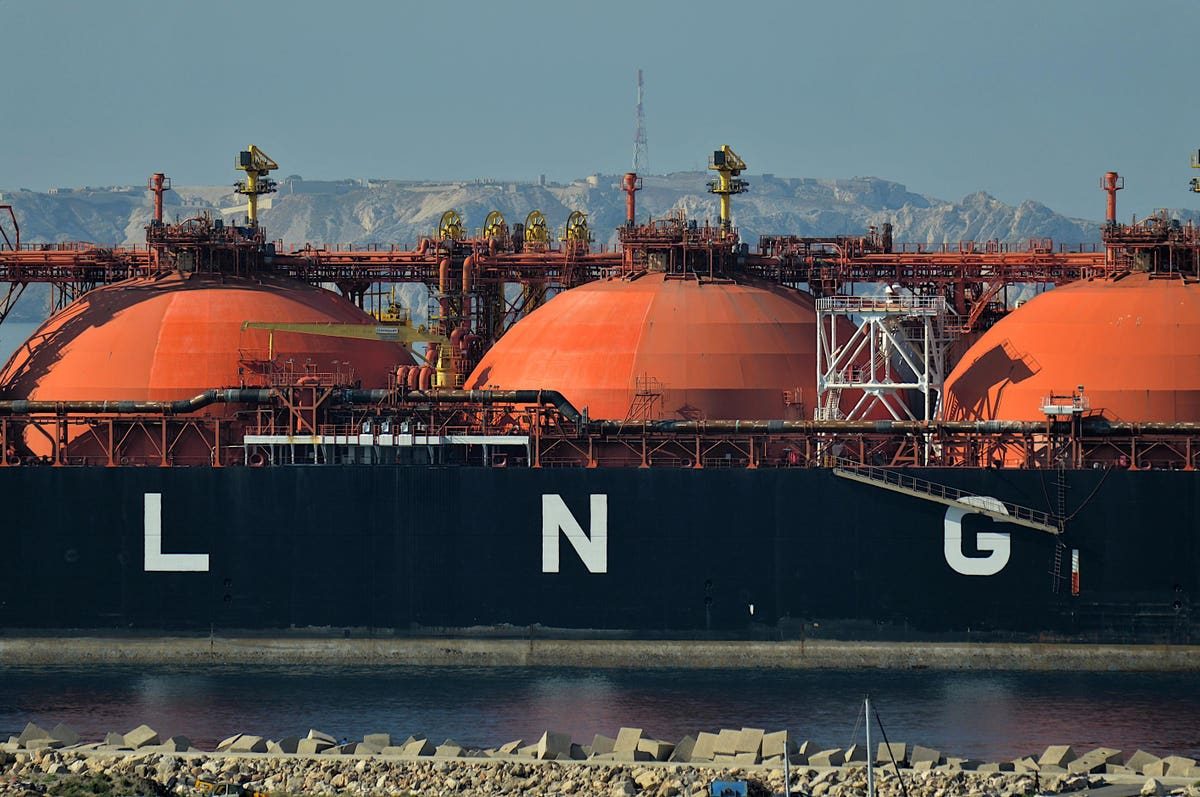
US LNG exports are surging as Middle Eastern supply falters, but cheap solar and battery alternatives threaten long-term demand for costly new terminals.
Global liquefied natural gas trade hit a record 437 million tonnes in 2025, growing 6.3% year-over-year. However, the market now faces an unprecedented near-term contraction. Shell PLC warned that ongoing Strait of Hormuz blockades could shrink global LNG trade in both 2026 and 2027.
The disruption stems from the Iran war, which has temporarily knocked Qatar and the UAE out of the market. Together, they represent 16% of worldwide liquefaction capacity. War damage at Qatar's Ras Laffan facility will specifically strip almost 13 million tonnes per year of supply for the next three to five years.
Asian buyers are reacting by draining gas storage, switching to coal, and imposing curtailment measures. Tankers originally bound for Europe are being diverted to the Asia-Pacific to cover the shortfall. This crisis is accelerating a shift toward US supply.
The US Gulf Coast is currently leading global capacity expansion. American exports to 43 countries are projected to hit 120 million tonnes per year in 2026. Recent pricing conditions push annual export revenue past $60 billion, generating $8.2 billion in tax receipts for government entities.
Long-term forecasters remain highly bullish on this US expansion. The Oil and Gas Journal cites Shell projections that consumption will rise 65% to 700 million tonnes per year by 2050, driven by South and Southeast Asian economic growth. The International Gas Union offers an even more aggressive timeline, forecasting capacity will hit that 700 million tonne mark by 2030.
Renewable risk to capital
However, billions of dollars in planned US infrastructure could face stranded asset risks if Asian power markets pivot away from gas. A Reuters analysis found energy executives increasingly favor solar and battery storage to power new data centers over natural gas.
The financial case against LNG in Asia is strengthening rapidly. An Ember report notes that solar paired with battery storage is already cheaper than LNG in three-quarters of Asian districts planning gas-fired power. Ember predicts this hybrid renewable model will undercut LNG across the entirety of Asia by 2030.
This poses a critical dilemma for investors. Large-scale US LNG terminals require $15 billion to $25 billion to build and carry a market life of just 10 to 20 years. If Asian nations accelerate their adoption of cheaper Chinese renewables, the projected multi-decade demand boom for US LNG could fail to materialize.