Asian chipmakers rally as AI capex, oil pressure bonds
Asian equities gained on surging chipmaker demand, but escalating Middle East tensions and Alphabet's massive AI spending hike pushed oil higher and kept long-term Treasury yields elevated ahead of a critical Federal Reserve meeting.
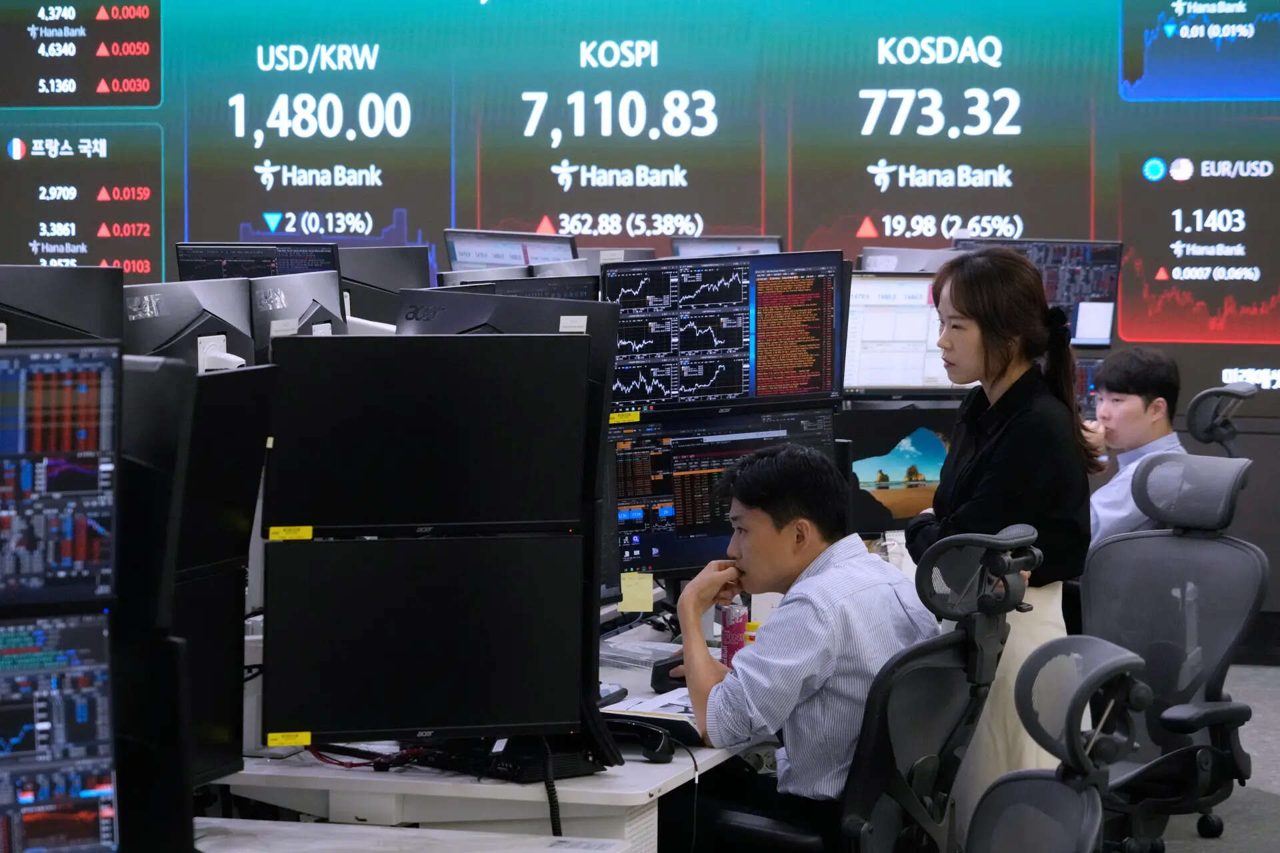
MSCI’s Asia Pacific equities gauge climbed 0.8%, driven by a more than 3% jump in South Korea’s Kospi. The rally was led by Samsung Electronics and SK Hynix, which both rose over 4% as investors bet on the hardware backbone of the global AI buildout. US equity-index futures also pared earlier losses triggered by disappointing megacap earnings.
Alphabet slid more than 3% in extended trading after revealing capital spending could reach $205 billion this year, far exceeding Wall Street expectations. The company is accelerating investment in AI computing capacity, setting a cautious tone for upcoming results from Microsoft, Meta Platforms and Amazon. International Business Machines edged lower on a weak full-year sales outlook, while Tesla fell 4% after missing estimates.
The market reaction suggests investors are demanding concrete returns on massive AI infrastructure commitments. “AI optimism remains intact, but the burden of proof has shifted decisively onto management teams,” wrote Mark Malek, chief investment officer at Siebert Financial. “Future earnings calls will increasingly focus on return on invested capital rather than AI ambitions.”
Outside of tech, geopolitical risks took center stage as Houthi militants targeted two Saudi Arabian tankers in the Red Sea. Global benchmark Brent crude advanced 2% to around $96 a barrel. The escalation prompted warnings from US President Donald Trump regarding strikes on Iranian infrastructure, with Tehran issuing its own threats in response.
The surge in energy prices pressured government bonds, with the two-year Treasury yield rising four basis points. The 30-year bond yield held above 5% for its longest stretch since the financial crisis, reflecting anxiety over sticky inflation and the federal debt load. Ahead of next week's Federal Reserve meeting, money markets are pricing a 30% chance of a rate increase and a 70% probability of holding steady.
The inflationary impact of higher oil is also squeezing the Japanese yen, which slid to its weakest level since 1986. “Japanese policymakers are facing an uphill battle to support the yen while the price of oil jumps back up towards $100 per barrel,” said MUFG Bank strategist Lee Hardman. People familiar with Bank of Japan thinking said the central bank remains open to raising rates sooner than its typical six-month interval.
For portfolio managers, the diverging forces require a more nuanced approach to tech allocations. “We remain constructive on AI’s growth story, but we favor a more balanced exposure across the AI value chain — from semiconductors and hardware to megacap tech and more defensive areas of the industry,” said Ulrike Hoffmann-Burchardi at UBS Chief Investment Office. “Investors should also ensure diversification beyond AI.”