AI mapping to unlock $750m Nigeria mini-grid investment
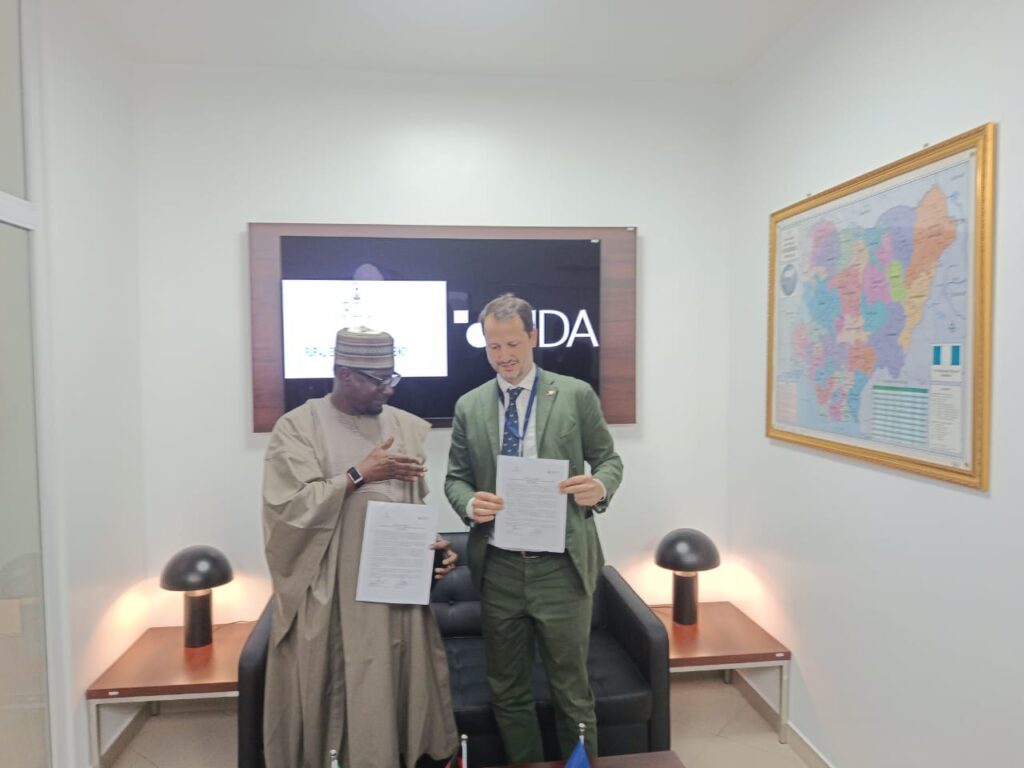
Nigeria's Rural Electrification Agency has expanded its AI partnership with German firm VIDA to map and deploy a $750 million mini-grid fund, a move designed to de-risk the market for private renewable energy investors.
Nigeria’s Rural Electrification Agency (REA) has extended its partnership with German technology company VIDA to use artificial intelligence in allocating a $750 million rural electrification fund. The agreement, signed in Abuja on Wednesday, extends the annual collaboration for another year. The funding targets the deployment of 1,350 renewable mini-grids to provide power to 17.5 million people.
For investors, the core appeal of VIDA’s platform lies in its ability to reduce the friction and uncertainty of deploying capital in frontier markets. By using AI to map households and analyse socio-economic data, the agency is building a subsidy framework that gives private developers clearer visibility into where demand exists. Tobias Engelmeier, VIDA’s chief executive, noted that this data-driven approach is accelerating private sector participation.
“That level of transparency did not exist before. It has helped accelerate private sector investment in electrification across Nigeria, and we can monitor progress on the platform every day,” Engelmeier said. The platform supports the REA’s distributed renewable energy subsidy scheme by identifying the least-cost options for connecting unelectrified communities.
The technology replaces expensive and time-consuming field surveys, ensuring public capital is deployed efficiently. “We do not want to just take this funding and start electrifying communities. We need data. We need a plan that tells us where these Nigerians without electricity are located and what the least-cost option is for providing them with electricity,” said Abba Abubakar Aliyu, managing director of the REA.
While VIDA operates as a commercial entity, its pricing is scaled to the scope of the work, allowing it to continue funding innovation while supporting government agencies. The partnership represents a broader push in Nigerian-German cooperation to modernise infrastructure planning and attract private capital to the country’s energy transition. The World Bank is involved as a development partner in the initiative.
The REA is also prioritising internal capability building, aiming to ensure its personnel can eventually run the AI-powered tools without external support. Looking ahead, the agency believes the data generated could extend beyond electrification into broader economic development planning.
VIDA views Nigeria as a flagship market for its technology across emerging economies. “My interest is to make the best available technology accessible to the people who need it most, and Nigeria is a very strong use case,” Engelmeier said. The model’s performance has already attracted inquiries from other African governments seeking to replicate the approach.