EQT picks five Hong Kong deep-tech finalists for 2026 impact challenge
EQT has narrowed a pool of over 200 applicants to five deep-tech finalists in Hong Kong, signaling growing private capital interest in the city's ability to commercialize early-stage climate and health innovations.
EQT Group has selected five deep-tech start-ups as finalists for its 2026 Impact Challenge in Hong Kong. The companies were chosen from more than 200 entries focusing on climate, nature, health, and well-being. Rather than offering purely financial backing, the competition provides early-stage founders with direct access to EQT's global network and an active ownership model.
For market participants, the challenge highlights a critical friction point in Asian venture capital: bridging the gap between scientific prototypes and scalable commercial enterprises. “The overall ecosystem can still improve, though, by helping more companies make the jump from research or prototype to becoming a real commercial business. That is often the hardest part,” said Jean Eric Salata, chair of EQT Group.
Hong Kong's start-up ecosystem reached a record 5,221 companies last year, up from 4,694 in 2024, according to InvestHK. This growth is underpinned by the Shenzhen-Hong Kong-Guangzhou cluster, which the World Intellectual Property Organization ranked as the world’s top innovation hub in its 2025 Global Innovation Index. However, Salata noted that founders often struggle to articulate a clear path to market adoption, a key metric for institutional investors.
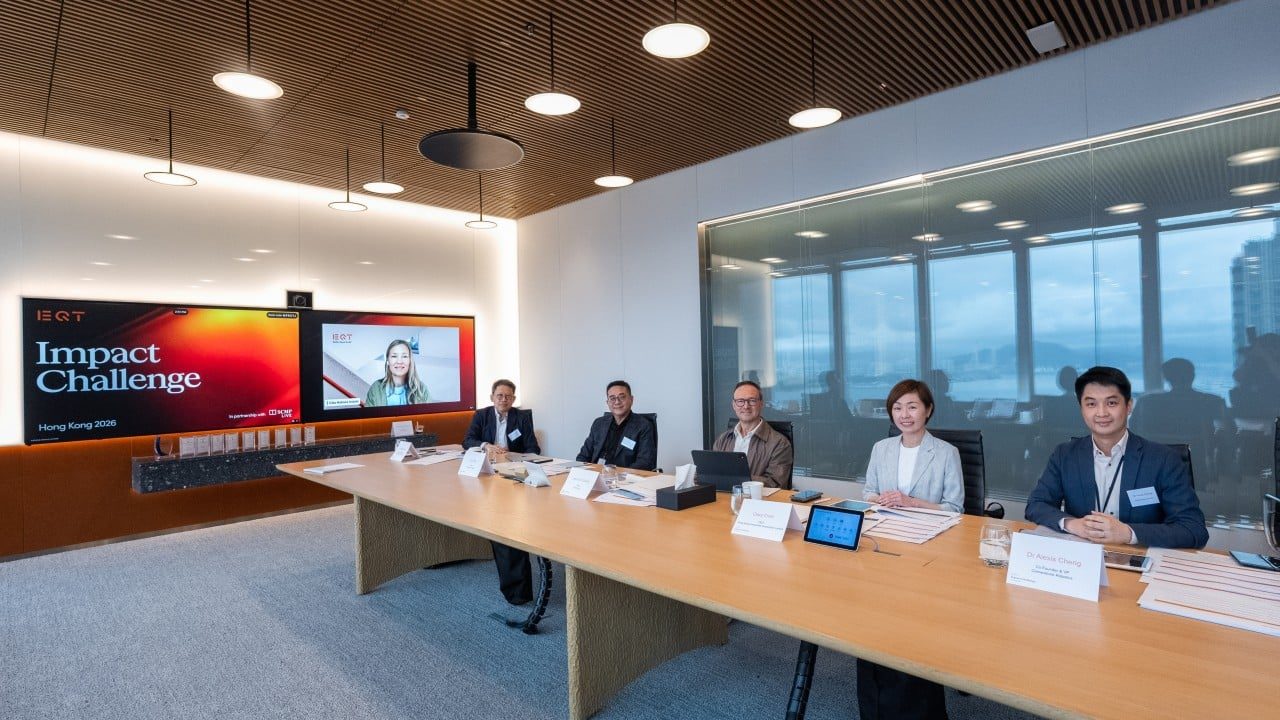
A jury panel that included Clara Chan, CEO of the Hong Kong Investment Corporation, and Eric Ng, CEO of Happiness Capital, evaluated the contenders on July 14. Founders were given three minutes to pitch without visual aids, facing immediate scrutiny on market demand, execution feasibility, and competitive moats. “If the market demand is not clear, if the assumptions are not well supported, or if the technology is looking for a problem rather than solving one, that becomes difficult,” Salata said.
The surviving start-ups reflect a heavy weighting toward biotech and advanced materials. Advent Gene Therapeutics is using AI to develop synthetic AAV capsids for gene therapy, while C2iTech is building patient-derived organoids to improve oncology drug development. OmisHeart Biotechnology is tackling cardiac dysfunction with a non-viral delivery platform currently in pre-clinical trials.
The remaining finalists operate in climate-adjacent spaces. HydroForge, a seed-stage company founded in January, is building integrated electrolysis systems for low-cost green hydrogen production and plans a demonstration project in Hong Kong. Okosix has generated about US$3.2 million in revenue to date by developing biopolymers to replace fossil-based plastics in healthcare, and is now targeting patent licensing partnerships in Europe and North America.
The active ownership approach