Dangote expansion to make it world's largest jet fuel producer
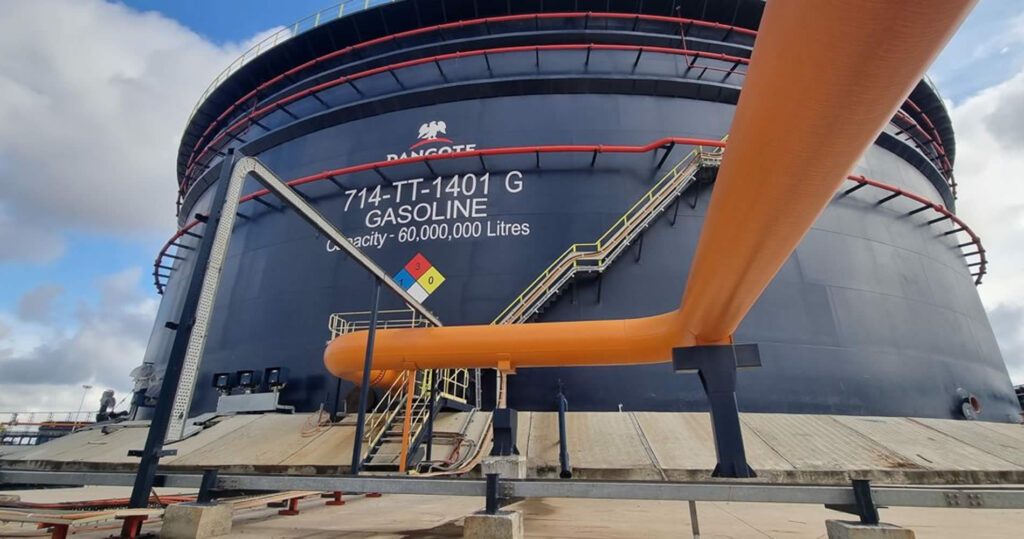
Dangote Refinery's planned capacity doubling to 1.45 million barrels per day positions it to dominate global aviation fuel supply as European refining capacity shrinks.
Dangote Petroleum Refinery is planning to double its capacity from roughly 700,000 barrels per day to 1.45 million bpd within the next 30 months. The expansion targets a lucrative global aviation fuel market currently constrained by shrinking European capacity and Middle Eastern supply disruptions. “Argus understands that the doubling of capacity at the existing Dangote refinery will be proportionally similar to current output. This indicates that jet fuel output at Dangote will roughly double upon completion of the expansion and potentially become the largest jet fuel producer in the world,” said Amaar Khan, Jet Fuel Analyst at Argus Media.
Europe has permanently lost five refineries over the past two and a half years, limiting its ability to meet recovering aviation demand. “Dangote’s jet fuel exports could become increasingly important to Europe in the coming years,” Khan noted. “Jet fuel demand is set to increase year-on-year in line with air travel demand, while Europe is unlikely to add new refining capacity.”
Geopolitical risks are amplifying the pricing power of the Nigerian facility. Disruptions around the Strait of Hormuz have left global markets undersupplied, keeping jet fuel at roughly $1,200 per tonne, about 50 per cent above pre-conflict levels. “Without flows through the Strait of Hormuz, the world is still undersupplied on jet fuel,” Khan said. “Jet fuel prices are expected to remain elevated for the rest of the year at least, even if the strait reopens.”
Domestically, the 650,000-bpd facility has already replaced imported aviation fuel following a 2024 agreement with local airlines. More broadly, the integrated complex is reversing decades of economic drain. Successive governments spent an estimated $18 billion to $25 billion over two decades trying to fix state-owned refineries with a combined 445,000 bpd capacity, yet utilisation remained negligible. Unlike those facilities, Dangote produces high-value petrochemicals like polypropylene alongside transport fuels, diversifying its revenue base.
Processing crude locally resolves a long-standing macroeconomic paradox where rising crude prices simultaneously boosted Nigeria's export earnings and inflated its fuel import bill. By retaining value domestically, the refinery lowers foreign exchange demand and eases pressure on the naira. The federal government now views the plant as a strategic asset, with Minister of State for Petroleum Resources (Gas) Ekperikpe Ekpo calling it “a source of national pride and one of Nigeria’s most transformative industrial investments.”
Dangote Group is already looking beyond Nigeria, with reported interest in building another refinery in Kenya or Tanzania to serve regional demand. However, sustaining high utilisation rates will depend on securing reliable crude feedstock under domestic supply obligations and navigating fluctuating global refining margins.