US pushes to replace Chinese oil deals in Iraq
Washington is drafting a broad cooperation agreement with Baghdad to displace deeply entrenched Chinese energy and infrastructure investments in Iraq's oil sector.
The White House is working to construct a comprehensive cooperation framework with Iraq designed to end Beijing’s dominant position in the country’s energy and infrastructure sectors. The initiative follows a meeting last week between President Donald Trump and Iraqi Prime Minister Ali al-Zaidi, and aims to replace agreements established by China between 2019 and 2021.
China currently holds significant advantages in Iraq. Under a 2019 “Oil for Reconstruction and Investment” agreement, subsequently expanded in 2021, Chinese firms secured priority access to new oil field contracts and discounts of up to 30% on recovered oil and gas. These deals also granted Chinese developers rights to build extensive infrastructure, including road and rail networks, and to use selected Iraqi military and civilian ports and airports.
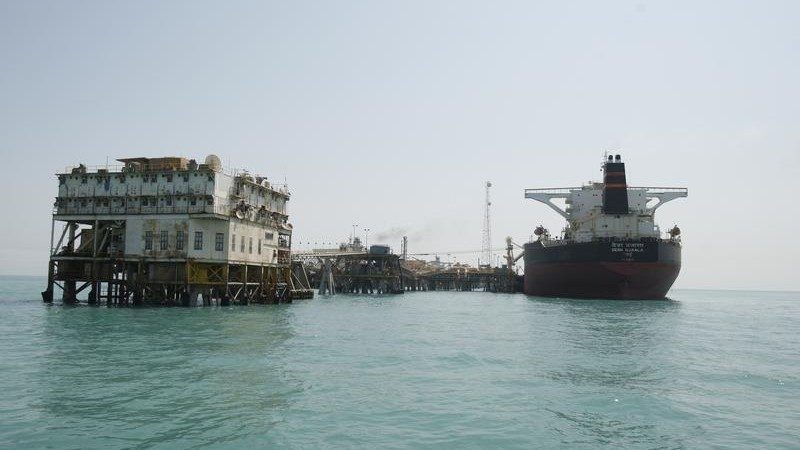
Beijing’s presence extends deep into Iraq's oil-rich regions. Chinese companies have been contracted for major projects in the Basra hub, including roughly $700 million in critical infrastructure in Al-Zubair, and a civilian airport in Dhi Qar governorate with associated cargo and road links. Further north, Chinese firms are building out Al-Sadr City near Baghdad at a cost of $7 billion to $8 billion.
Washington’s ability to counter these agreements has historically been constrained by Iraq’s ties to Iran. However, a more aggressive U.S. stance toward Baghdad-Tehran relations and the arrival of Prime Minister al-Zaidi have shifted the political dynamics. The U.S. cannot use its preferred regional template—the Israel-focused Abraham Accords—due to a 2022 Iraqi law criminalizing relations with Israel, mandating life imprisonment or death.
Instead, the U.S. strategy relies on a sprawling set of agreements covering energy, infrastructure, security, and intelligence. A senior EU security source indicated these agreements will span all of Iraq, a point al-Zaidi emphasized by noting cooperation would reach the Kurdistan Region, Basra, Anbar, and all governorates.
The explicit inclusion of the semi-autonomous Kurdish north is central to Washington’s plan. The U.S. and its allies have long used the Kurdistan Regional Government as a security foothold against Islamic State and for monitoring Iran. Conversely, Russia and China have sought to diminish Western influence by advocating for a unified Iraq governed solely from Baghdad, viewing the expulsion of Western energy deals as a decisive step against Western hegemony in the Middle East.