China's open-weight AI labs face brutal economics
Publicly traded Chinese AI developers are suffering steep stock declines and staggering losses, exposing a structural flaw in the open-weight model that funnels profits to cloud providers rather than the companies building the technology.
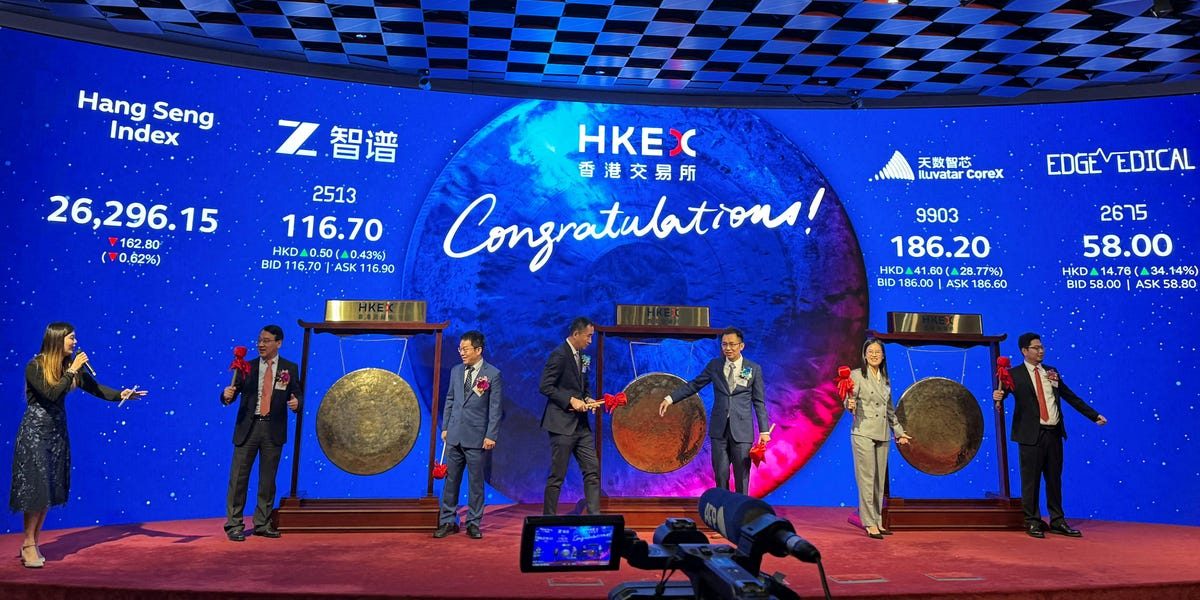
Zhipu, the lab behind the impressive GLM 5.2 model, lost almost $500 million last year on $107 million in revenue, sending its stock down more than 40 percent over the past month. MiniMax fared no better, losing $250 million on $79 million of revenue while its shares dropped over 50 percent in the same period. The market is reacting to a fundamental reality: distributing open-weight AI models is a deeply flawed business.
Unlike traditional open-source software, which can be copied at zero marginal cost, AI requires expensive chips, electricity and data-center capacity for every single query. Moonshot AI demonstrated this physical constraint last week when it had to halt sign-ups for its new Kimi K3 model simply because it lacked the computing power to serve new users. Adding customers does not scale easily; it directly increases the infrastructure bill.
By giving away their models' trained parameters, these labs forfeit control over the most lucrative part of the process: inference. Corporate customers typically download the models and run them on their own systems, or rely on cloud giants like Amazon, Microsoft, Google, Oracle and Alibaba. "Inference workloads will flow to whoever can operate the inference infrastructure most efficiently, and this is usually not the model provider," noted William Blair analyst Arjun Bhatia.
Investors hoping for a repeat of IBM's $34 billion acquisition of Red Hat are misunderstanding the market. "Unlike open-source software, open-weight models do not generate significant sums of revenue by selling support, services, and enterprise editions around the free offering," Bhatia wrote. The result is a dynamic where cloud providers capture the steady profits—Alibaba's stock is up roughly 13 percent over the past month—while the model creators bleed cash.
The financial pain may be a deliberate strategic choice rather than a miscalculation. "Intense domestic competition has also led to more aggressive pricing competition," said Barclays analyst Raimo Lenshow, warning of uncertainty regarding long-term profitability for AI labs. Chinese developers appear to be releasing models with "little regard for near-term profitability," Bhatia observed, aiming to commoditize the technology and squeeze the margins of US competitors like OpenAI and Anthropic.
This strategy is now official state policy. President Xi Jinping recently used a speech in Shanghai to urge countries to embrace "open-source, openness, collaboration, and sharing." For Chinese technology companies, such statements function as binding directives. Labs like Zhipu, MiniMax and Moonshot appear trapped between government mandates to freely distribute their technology and the impossible economics of actually turning a profit.