Ortega ends elections as Nicaragua pivots trade to China
Daniel Ortega's elimination of competitive elections accelerates a structural pivot to Chinese mining and trade that leaves Nicaragua exposed to devastating US tariffs.
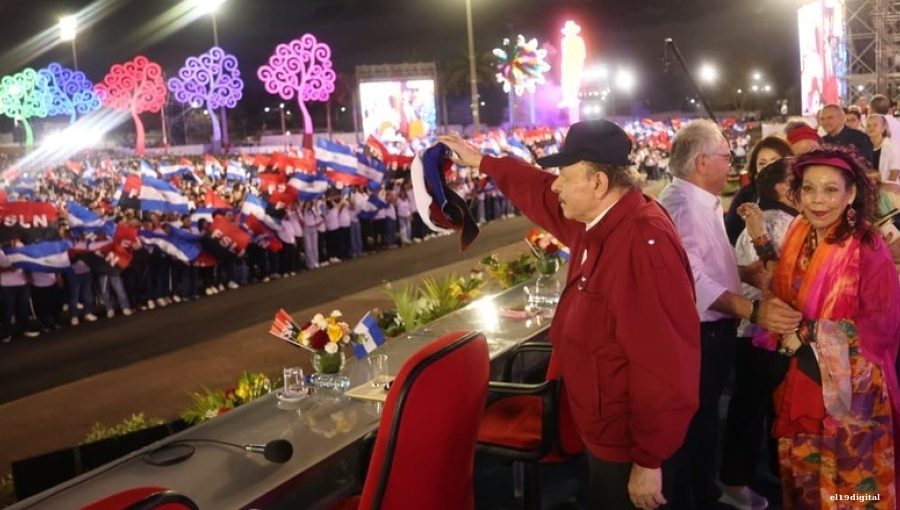
Nicaraguan president Daniel Ortega declared on July 19 that competitive elections are permanently finished, stripping the last legal pretence from his government. The announcement transforms a politically authoritarian state into an openly declared one-party system, fundamentally altering the risk profile for any foreign capital still operating in the country.
The political shift is driven by an escalating squeeze from Washington. An October 2025 USTR Section 301 investigation found that Managua restricts American trade, opening a path for tariffs to reach 15% by 2028. Washington is also threatening to suspend Nicaragua's benefits under CAFTA-DR, the trade deal that has anchored its export economy for two decades.
The uncertainty is already inflicting economic damage. Employers in Nicaragua's free trade zones have shed tens of thousands of jobs as the threat of losing US market access looms. Simultaneously, US Treasury sanctions on gold mining and the presidential family are steadily cutting off the regime's access to dollar clearing.
Pushed out of the US financial system, the Ortega-Murillo government is rapidly transferring national assets to Beijing. Between 2021 and June 2026, Managua granted 22 Chinese firms concessions across 84 lots covering 1.28m hectares—roughly 10% of Nicaragua's entire territory. Environmental groups warn this could eventually reach 40% of the country, effectively moving the national subsoil beyond the reach of OFAC.
State trade flows are being similarly restructured. A June 2026 reform of the state trading company ENIMEX handed chairmanship and a casting vote to Laureano Ortega Murillo, the president's son. The reform scrapped internal conflict-of-interest controls, positioning the family to manage all strategic imports and exports with China and Russia free of standard oversight.
The broader trade balance under the China-Nicaragua free trade agreement, reinforced by a May 2026 decree eliminating remaining Chinese tariffs, is heavily skewed. Nicaragua exported just $81.1m to China in 2025 while importing $1.89bn, a 23:1 deficit that is undercutting domestic retailers.
Isolated after the US capture of Venezuelan president Nicolás Maduro, Managua is trading long-term economic sovereignty for short-term regime survival. As exiled presidential candidate Félix Maradiaga noted, "the mask that gave the regime a veneer of legality has fallen off," leaving investors to navigate a state fully reliant on Chinese capital.