Saturday, 12 September 2026 · World
USD/EUR 0.862 USD/GBP 0.7395 USD/JPY 153.8 USD/CNY 6.725 All rates →
RSS
EUROS The World Financial Report
Nº 63 Saturday, 12 September 2026 · World Edition
Europe

What is Spain's World Cup victory actually worth to the national economy?
Euros Room · 20 Jul 2026 · 🇦🇷 Argentina
What is Spain's World Cup victory actually worth to the national economy?

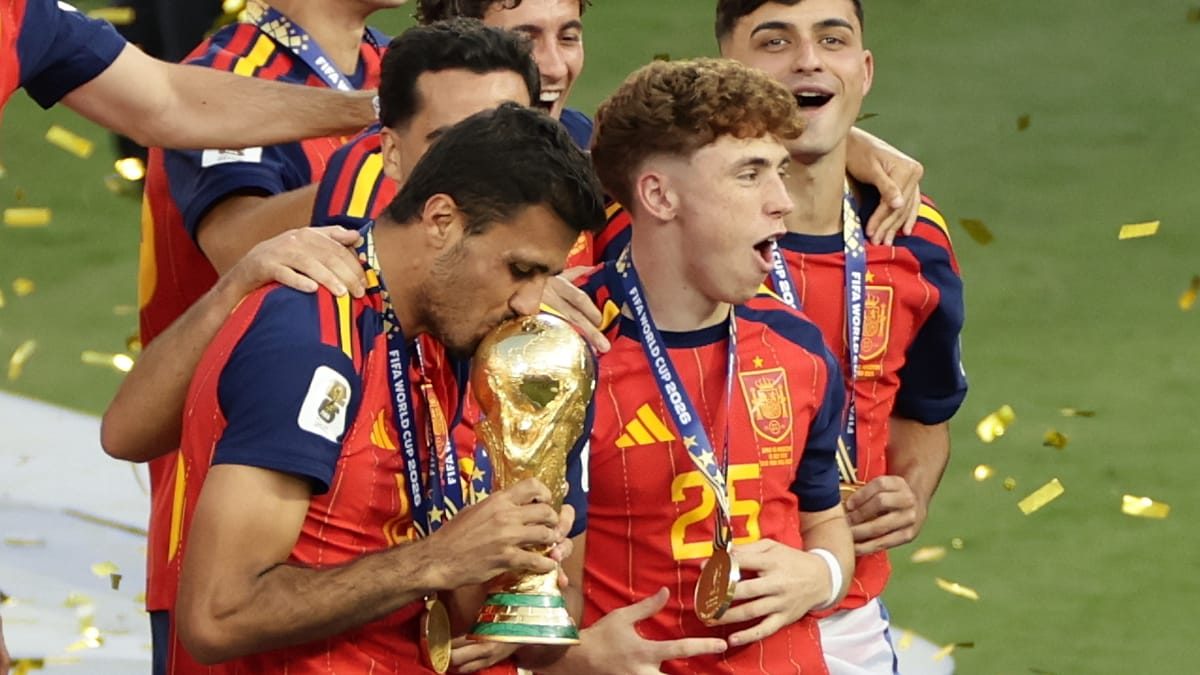
Spain's 1-0 victory over Argentina in Sunday's World Cup final brings a record $50 million (€43.7m) cheque from FIFA and, if past champions are any guide, a measurable but fleeting lift for the economy.

A 106th-minute strike from Ferran Torres gave Spain a second world title, 16 years after South Africa, and immediately revived a familiar question: does winning actually make a country richer?

FIFA pays the champion federation a record $50 million (€43.7m), up from the $42 million (€36.7m) Argentina collected in 2022, out of a $655 million (€572m) prize pool spread across the expanded 48-team tournament.

The Spanish federation decides how much to distribute among the squad, the coaching staff and the wider support team, while whatever is left over funds the RFEF's own running costs and development programmes, and every payment is taxed.

The Spanish authorities stand to collect around €6 million from the 17 squad members resident in Spain, most of it, some €4.4m, flowing to the state tax agency, with smaller shares to the Navarre and Basque treasuries.

According to a 2024 study by economist Marco Mello of the University of Aberdeen, published in the Oxford Bulletin of Economics and Statistics, winning the World Cup lifts a champion's year-on-year GDP growth by at least 0.48% over the two quarters after the final, before the effect fades, though the study's sample of champions is inevitably small.

Applied to Spain's €1.69 trillion economy, that estimated uplift is worth roughly €4 billion, according to Pedro Santa Cruz, director of Freedom24 Iberia, who nevertheless cautions that the FIFA prize itself equals about a quarter of an hour of national output.

Bar and restaurant transactions jumped 36% during Spain's group games, with peaks of 66% in Seville, according to data from the payments platform Square cited by Santa Cruz, but much of that is spending displaced from elsewhere rather than new money.

The celebrations from the victory are anticipated to have a similar effect with over one million people expected on the streets of Madrid to welcome the winning team back.

Spain's own past offers the starkest warning against overclaiming.

The 2010 triumph arrived with unemployment around 20% and the economy sliding towards a banking bailout, and the trophy changed none of it.

Mello's research also finds no significant long-term growth effect for host countries.